
Casino Software in NZ: Providers and Operators
 Available in US
Game providers build and maintain titles, while operators manage player accounts, transactions and the casino lobby.

Table of Contents
- How Online Casino Software Is Divided Between Providers and Operators
- What Bitcoin Casino Software Actually Refers To
- How Slot Software Uses Random Number Generators
- What Game Software Can—and Cannot—Change About Outcomes
- What to Check Before Downloading Casino Software
- New Zealand’s Online Casino Licensing Framework
- Roulette Software, RNGs, and Claims of Cheating Tools
- Free Casino Software and the Terms Attached to Bonus Play
- Casino Platforms, Computer Access, and the Neteller Search
- How to Compare Casino Game Providers Without a Name-Based Ranking
How Online Casino Software Is Divided Between Providers and Operators
“Casino software” can describe different parts of an online casino, so the term alone does not tell you which company controls a particular function. The key distinction is between the provider that creates and maintains the games and the operator that runs the casino service. One supplies the games; the other manages your player account and the transactions connected to it.
A game provider builds the titles that appear in a casino lobby. Its work shapes each game’s theme, sounds, symbols and gameplay, as well as its stated return to player, or RTP. The provider also maintains those games and makes decisions about which devices can run them and how they work on online casino platforms. When you open a game, you are interacting with software supplied by a provider, even though you reached it through an operator’s website or app.
The operator has a different job. It manages player accounts, deposits and withdrawals, and selects which games to make available in its lobby. That means a casino is not a single piece of software produced by one company. It is a service assembled around an operator’s account and transaction functions, with games supplied by one or more providers. The two roles may meet in the same user experience, but they are not interchangeable.
Choosing casino software for play in New Zealand calls for attention to the information available about each operator, including its stated licensing and payout details. Use these brief verdicts as a starting point when deciding which options to explore.
License: Tobique Gaming Commission, licence no. 0000064 Neospin lists a licence from the Tobique Gaming Commission, number 0000064. You can use that stated licensing detail as one point of reference.
License: Tobique Gaming Commission, licence no. 0000091 7Bit Casino lists a Tobique Gaming Commission licence, number 0000091. This gives you a specific licensing detail to consider.
License: Malta Gaming Authority, licence no. MGA/B2C/370/2017 Play Grand lists a Malta Gaming Authority licence, number MGA/B2C/370/2017. You can factor this stated licence into your assessment.
License: Tobique Gaming Commission, licence no. 0000002 Ricky Casino lists a Tobique Gaming Commission licence, number 0000002. Its stated licence is the available point of reference here.
License: 07017519840 · Payout speed: 1-3 business days Zotabet lists licence number 07017519840 and a payout speed of 1–3 business days. You can consider both details when reviewing the operator.
License: Malta Gaming Authority, licence no. MGA/B2C/394/2017 N1 Casino lists a Malta Gaming Authority licence, number MGA/B2C/394/2017. You can use this licensing information as a reference point.
Payout speed: 1-3 business days Lamabet lists a payout speed of 1–3 business days. This stated timeframe is the available detail to consider.
Payout speed: 1-3 business days Wintino lists a payout speed of 1–3 business days. You can take this stated timeframe into account.
License: Curaçao Gaming Authority, licence no. OGL/2024/165/0185 BitStarz lists a Curaçao Gaming Authority licence, number OGL/2024/165/0185. You can consider this stated licensing detail when reviewing the operator.
This separation helps clarify what you are assessing when you ask whether online casino software can be trusted. A game’s design and RTP are provider-level attributes. The handling of your account and payments belongs to the operator. A positive impression of one does not, by itself, establish anything about the other. Likewise, seeing a particular game in a lobby tells you who supplies that game, not who operates the account you use to access it.
The distinction also gives a more precise meaning to “casino accounting software.” If you mean the games that players see, that is provider software. If you mean the systems associated with account and transaction management, those functions sit on the operator side of the boundary. The term can therefore refer to unlike things, and it is worth identifying whether a claim concerns game content or the casino service around it before drawing conclusions.
The same care applies to phrases such as “custom casino software.” A game provider determines how its titles are presented and played; the operator decides which supplied games appear in its lobby and manages the player relationship. A request for a particular game or feature is not automatically a request for a custom-built game. Nor does the fact that a game appears on a casino site establish that the operator created it.
Bonus terms show why the distinction matters in practice. A bonus is attached to the operator, not to the company that made a game. A specialist review has described matched bonuses as usable across most of a casino’s game library, but that is a report about a particular offer and should not be treated as a standing rule. The conditions displayed by the operator are the relevant terms for that offer.

The same specialist-review context has described pokies as contributing fully toward bonus playthrough, while live dealer and other table games may contribute less or not at all. It has also reported that many table games contribute 20%, with some roulette games contributing 35%. Those figures should not be taken as universal settings: contribution depends on the terms attached to the operator’s bonus. The provider creates the game, but it is the operator’s bonus rules that determine how play on that title counts. Check the playthrough requirement and the listed contribution for the specific game before using bonus cash.
Searches for cheat software also blur the boundary. A game provider supplies a game; the operator manages the account through which you access the lobby. A label suggesting that a tool can alter a casino game does not establish what the tool does or whether it can affect either company’s systems. Keep claims about a game separate from claims about account access, and do not assume that software advertised as a shortcut is part of the casino’s own game or account service.
The practical test is to ask what a statement refers to: the game and its characteristics, or the account and transactions around it. That simple separation makes software descriptions easier to interpret. It also prevents a provider’s role in creating games from being confused with the operator’s responsibility for the casino account.
Creates and maintains the titles, including themes, sounds, symbols, and gameplay.
Manages player accounts, deposits, withdrawals, and selects the game lobby.
What Bitcoin Casino Software Actually Refers To
The phrase “Bitcoin casino software” can point to two different parts of an online casino. In a crypto-casino context, it may mean the software behind the games available there. It may also be used loosely for the wider service that lets a player open an account and use the casino. Those are not the same thing.
A game provider, also called an online casino software developer, creates and maintains games that can appear in online crypto casinos. The provider’s software supplies the games themselves. The casino operator runs the service around them, including the player account and its deposit and withdrawal processes. So a game described as Bitcoin casino software does not, by that description alone, identify who manages your account or handles your funds.
The game layer and the casino service
Think of the casino as a service that brings together separate components. The games are one component; the operator’s account service is another. A game provider can make its games available within a crypto casino without being the company that runs that casino. The word “Bitcoin” in a label does not collapse those roles into one.
This distinction matters when you compare what a product claim actually describes. If the claim concerns a game provider, it is about the company responsible for creating and maintaining games that may appear in an online crypto casino. If it concerns the casino service, it is about the operator and the functions it runs for players. A page or product label that says “casino software” may not make clear which of these it means, so identify the function being described before drawing conclusions from the wording.

The same applies to phrases such as “crypto casino software” or “Bitcoin online casino software”. They can sound as if they name a single package that builds and runs a whole casino. In practice, the phrase may instead refer to games supplied by developers and displayed in a casino operated by a separate company. The label alone does not establish that a provider runs the casino, manages player accounts, or processes withdrawals.
What the word “software” does not settle
Software is a broad label, not a precise description of responsibility. In this context, it can refer to the games that a player sees in the casino lobby, or it can be used to describe the casino service more generally. Those meanings should not be treated as interchangeable.
For example, finding a game in a crypto casino does not tell you that its developer also operates the casino. Likewise, a casino’s use of games from a provider does not mean the provider controls the operator’s account arrangements. The game provider’s role is to create and maintain games; the casino operator’s role is to run the player-facing service.
That boundary is useful when a site uses phrases such as “BTC casino software” or “casino betting software”. Such wording does not, by itself, tell you whether the offer is a collection of games, a casino service, or something else. Look for a clear description of who makes the games and who operates the casino. If those roles are not identified, the phrase is too broad to establish what is being offered.
- Identify the specific game version via its information screen.
- Separate the role of the game provider from the casino operator.
- Assume a single company handles both game creation and account management.
- Treat broad labels like “best casino software” as specific product assessments.
Price and “best” claims need a defined subject
A price claim is meaningful only when you know what is being priced. A reference to Bitcoin casino software prices might concern a casino service, game development, or another product described with the same broad label. The phrase alone does not establish a particular product, provider, or price. Avoid treating a figure attached to an unclear label as a price for game software specifically.
“Best” and “top” also need a defined comparison. If the subject is game providers, the comparison should say that it is about developers and their games. If the subject is an operator’s casino service, that is a different comparison. A broad label such as “best casino software” does not tell you which role or product is being assessed, and it does not establish that one provider is best for every crypto casino.
When you encounter these terms, separate the questions: who created and maintains the games, and who runs the casino service? The first points to the game provider; the second points to the operator. That distinction gives “Bitcoin casino software” a usable meaning without assuming that every casino uses the same setup or that a provider’s games make it responsible for the entire service.
How Slot Software Uses Random Number Generators
A slot’s symbols do not determine their own positions. Software uses a Random Number Generator (RNG) to produce values that the game interprets as an outcome. The RNG supplies the changing input; the game’s rules determine how that input corresponds to symbols and a result on screen. This is the core mechanism behind digital pokies, whether you encounter them through a casino’s website or another online platform.
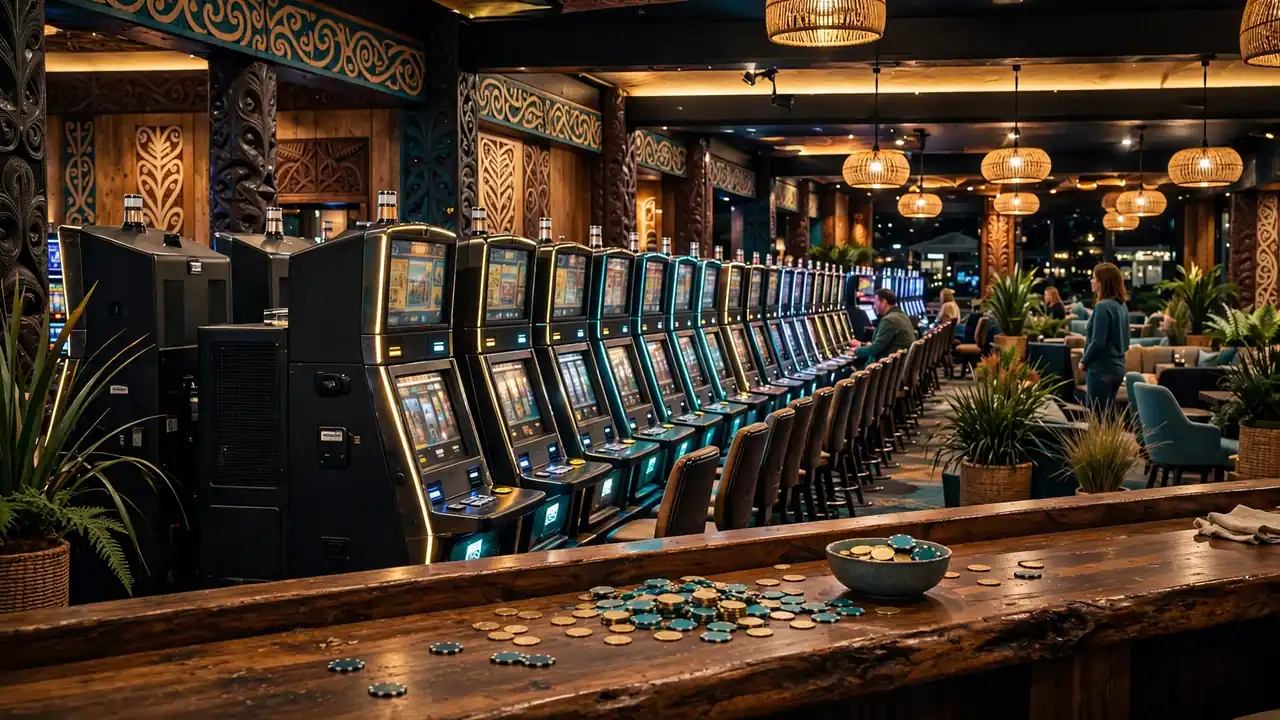
Most online casinos use pseudorandom number generators, or PRNGs. “Pseudo” describes how the numbers are produced: a PRNG applies a mathematical process to internal data to generate a sequence that appears random. The sequence is not created by drawing each result from an unknowable physical source. It is calculated by software.
That distinction matters, but it does not mean a player can predict the next result. The calculations and internal state used by a PRNG are not normally visible through the game display. Seeing a sequence of symbols on screen tells you what the game showed, not the internal information used to produce the next result. A sequence that looks patterned to a person also does not, by itself, reveal what the software will generate later.
In a slot, the game uses generated values as inputs to its outcome logic. That logic determines which symbols appear and how the result is presented according to the game’s rules. The RNG and the game’s presentation are therefore related but distinct parts of the process: one produces values, while the game interprets them. Animation may show symbols moving into place, but the visible motion is not the same thing as the number-generation process.
This is why “casino algorithm software” can be an imprecise description. A slot is not just one algorithm doing one job. Random-number generation is one function; the game’s rules and display are other functions. The details of how a particular game combines those parts can differ, so a general description of casino systems software cannot tell you the exact implementation used by every title.
Providers use RNG technology for slots as well as for other kinds of games, including crash and table games. For slots, the important point is that the result comes through the interaction of generated values and the game’s own rules. A theme, symbol set or animation may change what you see, but those visible features alone do not explain how the underlying values are produced.
A slot’s Random Number Generator (RNG) produces values that the game’s rules then interpret into visible symbols and outcomes.
When comparing casino slots software, keep the distinction between the displayed experience and the outcome mechanism in mind. The reels and sounds communicate a result; the PRNG is part of the software process that supplies values for that result. The term “random” does not mean that the software has no rules. It means the game uses generated values rather than selecting outcomes from the player’s chosen pattern of clicks or from the symbols currently shown.
Understanding that separation helps you interpret what a slot screen can and cannot tell you. It shows the game’s presented outcome, but not the PRNG’s internal calculations. The mechanism is software-driven, and its visible effects are the symbols and results the game displays.
What Game Software Can—and Cannot—Change About Outcomes
Software-based table games rely on random generators to produce outcomes. That applies across formats such as online blackjack, roulette and video poker: the relevant mechanism is the random generator, not the name of the game or the way you choose to bet. The software can present a game’s rules and options, but a betting pattern does not make an RNG-driven result more likely to follow your preferred sequence.
A strategy can still govern your decisions. You may choose when to bet, how much to stake, or which available move to make. Those choices affect your play, but they do not rewrite the random outcome generated by the game. Increasing a stake, changing a sequence of bets or waiting for a particular result does not make the generator produce a chosen result. A method that claims to control RNG outcomes confuses a player’s decisions with the game’s random process.

This distinction matters when assessing claims about the best casino gaming software or the top game software offered by online casinos. A familiar interface or appealing presentation does not, by itself, explain how outcomes are generated. Nor does the word “software” mean that a player can alter results from the game screen. The practical check is to identify the specific game version and read its information, rather than infer its mechanics from the title or appearance.
To find that version, open the game’s information screen and look for its identifying details. A specialist review may describe where a particular game displays this information, but the screen itself is the useful reference when you are checking the version you have opened. Read the displayed rules and details for that game; do not assume that two versions with similar names are identical. If the information is unclear, you cannot confidently determine which version is running from its appearance alone.
The same care applies to claims about casino hacking software. A tool or betting system cannot change the outcome merely by prescribing a sequence of wagers. The game’s random generator remains the mechanism producing the result; a player’s strategy is not a control for it. Treat promises to predict or force RNG-driven outcomes as claims, not as evidence that the game can be directed.
A useful fairness check is therefore narrow and concrete: identify the game version through its information screen, understand the rules shown for that version, and separate those details from claims about changing results. This does not make a strategy useless for organising your choices. It defines its limit: strategy can shape how you play, but it cannot determine the random outcome.
Checking Game Details
- Open the game’s information screen.
- Identify the specific game version.
- Read the displayed rules and mechanics.
- Verify how much each game contributes to bonus playthrough requirements.
What to Check Before Downloading Casino Software
A page offering casino game software for download may create the impression that you need a separate program before you can play. That does not follow from the fact that a game is software. Providers make games playable on online casino platforms and determine which devices support them; this does not establish that a standalone download is required.
Start by identifying what the download is supposed to do. Is it presented as a way to access games, or is it software for running a casino business? Those are different purposes. A game provider’s compatibility work concerns whether its games can run on a platform and which devices can run them. Terms such as “casino management software” or “white-label casino software” point toward business-facing software rather than, by themselves, a player application. The label alone does not tell you what is included or whether you need to install anything.
Before installing a file, check the compatibility information attached to the game or the platform where it is offered. Look for an explicit statement that the game supports the device you intend to use. If that information is absent, do not assume compatibility from the word “casino” or from a general claim that software is available. A provider decides which devices support its games, so support for one game or device does not automatically establish support for another.

Also separate device support from game behaviour. Compatibility describes whether the software can run on a given device through the casino platform; it does not describe how the game works or change its mechanics. A download claim is not evidence about either point. Keeping these questions separate helps you assess what the file is for without treating installation as a condition of play.
A “free download” label needs the same scrutiny. “Free” may describe the price of the file, but it does not explain what the software does, which games it supports, or whether it is necessary to access them. Read the description for the intended user and purpose before proceeding. If it describes tools for managing a casino rather than access to games, it is not a player-facing game installation simply because the word “casino” appears in the title.
Use a simple check before downloading: identify the software’s purpose, confirm that the game or platform lists support for your device, and verify whether installation is actually stated as necessary. If the description does not answer those points, pause rather than infer an answer from the product name. Compatibility is determined game by game and device by device; a broad download label cannot settle it.
New Zealand’s Online Casino Licensing Framework
New Zealand’s online casino rules are changing from a system without domestic licensing for offshore casino services to a local licensing regime. The Online Casino Gambling Act 2026, which took effect on 1 May 2026, created the country’s first framework for licensing online casino gambling. The Gambling Act 2003 does not permit online casinos to be based in New Zealand, so the new regime concerns the licensing of online casino services rather than a change allowing domestic casino sites.
New Zealand Licensing
The Online Casino Gambling Act 2026 establishes the first framework for licensing online casino services in New Zealand.
Responsibility is divided between the Department of Internal Affairs (DIA), which supervises the framework, and the Gambling Commission, which makes licensing decisions.
Responsibility is divided between two public bodies. The Department of Internal Affairs (DIA) supervises the framework for online casino licensing and has the wider role of regulating gambling in New Zealand. The Gambling Commission handles licensing decisions: it considers and determines casino licence applications, grants online casino licences, and approves changes to licence conditions. In practical terms, the DIA oversees the regulatory system, while the Commission makes decisions about who receives a licence and what conditions apply.
The change is being introduced in stages. Online casinos that were already providing services to people in New Zealand before 1 May 2026 may continue operating during the transition, which runs until 1 December 2026. This temporary permission is tied to the Act’s transitional provisions; it is not the same as holding a licence under the full regime. The complete licensed system is not expected to be operational until 2027, and unlicensed operation is expected to become an offence around the middle of that year.
That timing matters when interpreting claims about a casino’s regulatory status. Before the Act came into force, offshore online casino gambling was not licensed or supervised by a New Zealand regulator. A Kiwi who wagered with an offshore site during that period had no domestic government recourse. The transition changes the legal framework, but it does not make every operator licensed as soon as the law takes effect. For the relevant period, distinguish between permission to continue under transitional rules and a licence issued by the Gambling Commission.
If you are assessing the software behind a casino, the licensing framework answers a different question from the game’s technical design. It identifies the New Zealand bodies responsible for oversight and licensing; it does not, by itself, describe how a particular game works. The DIA’s role is system-wide regulation, while the Commission’s remit includes applications and licence conditions. Keeping those functions separate makes it easier to understand what regulatory status means without treating it as a claim about the software itself.
Roulette Software, RNGs, and Claims of Cheating Tools
Software-based roulette depends on a random number generator (RNG) to produce game outcomes. The wheel shown on screen is the game’s visual representation; the relevant mechanism is the generator that determines the result. A betting system may change which numbers you select or how you stake, but it cannot change an RNG-driven outcome.
That distinction matters when assessing claims about casino roulette cheating software. A tool that tracks previous results or recommends bets may affect your choices, but that does not mean it can control the generator or predict its next result. A sequence of past outcomes does not, by itself, give a betting strategy influence over future RNG-driven outcomes. Treat claims of guaranteed control as claims about the result mechanism, not as evidence that a strategy changes how roulette works.
The same principle applies whether roulette is encountered through conventional casino software, a crypto casino, or a turnkey platform. Those labels describe the setting or way the casino software is supplied; they do not establish how a particular roulette game generates outcomes. The key question for the game itself is whether it is software-based and uses a random generator. The category or packaging of the casino solution cannot make a betting pattern alter that process.
This also helps separate two ideas that are easy to blur. A game can present a wheel, numbers, and betting options that resemble physical roulette, while its result is generated by software. The interface shows you what you can bet on and what result occurred; it does not make a betting strategy a way to steer the generator. Changing your selection or stake changes your wager, not the RNG’s operation.
Betting Strategies
Attention A betting system or pattern cannot change or control the outcome of an RNG-driven game like roulette.
If a claim about a tool relies on the idea that a particular sequence must be “due,” it is describing a prediction strategy, not a change to the random generator. If it claims to manipulate the game, the claim concerns access to or control over the game mechanism and should not be accepted merely because the tool uses technical language. The mechanics described here establish that strategies do not change RNG-driven outcomes; they do not verify claims about any named tool.
When you assess software roulette, keep the focus on the mechanism rather than the sales language around it. RNG-based roulette produces results through a random generator, and no betting strategy changes that outcome. That is the useful boundary when judging promises attached to casino software solutions, including those presented for crypto casinos or as turnkey packages.
Free Casino Software and the Terms Attached to Bonus Play
“Free” can refer to different things: access to a game, a bonus offered by a casino operator, or software intended for running a casino. These are not interchangeable. A game provider creates and maintains games; the operator manages player accounts and sets the terms attached to its bonuses. A turnkey software offer, where the phrase is used for a casino-running package, therefore should not be confused with free access to games or bonus credit.
If you are considering free or open-source casino software, first establish what the offer actually covers. The phrase alone does not tell you whether it means playable games, development tools, or a platform for an operator. Nor does it establish that any particular product is available. For a player, the practical distinction is whether a casino is offering game access or a promotion, and which operator’s terms apply.
A casino bonus belongs to the operator, not to the provider whose game you open. The offer’s rules therefore come from the casino. A specialist review has described free-spin packages as being attached to particular game titles; treat that as a description of the offer it reviewed, not as a rule that applies to every promotion. Before accepting spins, check which title they apply to and whether they can be used in other games.
Bonus cash can also carry a playthrough requirement: you may need to wager it under stated conditions before it becomes withdrawable. Read the operator’s terms before using the balance, and check which games count toward that requirement and how much each game contributes. A specialist review has advised checking both the playthrough rules and game contribution percentages; the actual conditions depend on the promotion. Do not assume that playing any game in the lobby will count in the same way.
The distinction matters because game access and bonus progress are separate. A game may be available in the casino while contributing differently to a promotion, or not counting toward it under the stated rules. The bonus terms, rather than the game provider’s identity, determine how play affects the requirement.
A specialist casino review has also described registration and a minimum deposit as prerequisites to wagering real money at the casinos it covered. That observation should not be read as a universal condition. Check the operator’s own current terms to see what registration or deposit steps apply, and whether a bonus is optional or requires acceptance.
Summary
- Game providers create the content, while operators manage the service and player accounts.
- Software-based outcomes are driven by Random Number Generators (RNG) and cannot be manipulated by betting patterns.
- Always verify game versions and specific operator terms regarding bonuses and compatibility.
Before using bonus cash, make sure you understand the eligible games, contribution rules, and the point at which any playthrough requirement is cleared. If those terms are unclear, do not treat the bonus balance as ordinary withdrawable funds.
Casino Platforms, Computer Access, and the Neteller Search
When you access an online casino on a computer, the games in its lobby and the services that manage your account belong to different parts of the system. The operator runs the casino account: it manages registration details, deposits and withdrawals. Game providers supply the titles displayed in the lobby. Calling the whole arrangement “casino software” can blur that division.
A casino platform is the operator’s service as you encounter it: the place where your account and casino games are brought together. The games themselves come from providers. This means a computer-based casino experience is not necessarily one single program made by one company. The operator’s role concerns the account and transactions; the provider’s role concerns the games.
That distinction also helps make sense of searches for casino software to use on a computer. The phrase can refer to the casino service you access, or to the games available through it. It does not, on its own, tell you that a separate program must be installed. To understand what you are using, identify whether a feature belongs to the account service or to a particular game.
The same separation applies when Neteller is part of the terminology someone uses. It does not make Neteller part of the game software. A payment-related term concerns the operator’s side of the arrangement, because the operator manages deposits and withdrawals. The provider supplies games; it is not the party managing your casino account or its transactions.
When comparing platforms, keep the questions in the right order. First, establish which service manages the account and handles deposits or withdrawals. Then consider which provider supplies a game you want to play. A game’s presence in a casino lobby does not mean its provider operates the casino, and the operator’s payment functions do not make it the maker of each game.

This boundary is useful whether you are choosing a computer-accessible casino service or trying to understand a payment-related label. It prevents a product name or game title from being mistaken for the operator responsible for your account. Conversely, it prevents the casino platform from being mistaken for the company that created every game in its lobby.
How to Compare Casino Game Providers Without a Name-Based Ranking
A provider comparison is more useful when it describes the games and features each company controls than when it assigns companies positions on a “best” list. A top-ten ranking without stated, comparable criteria does not tell you whether a provider’s games suit what you want to play.
Start with game design. Providers choose themes, sounds and symbols, so you can compare the style and presentation of their games. Then consider gameplay: look at how a game is structured and what choices it gives you. These are distinct attributes. Two games can share a broad theme while offering different gameplay, or use similar mechanics with very different presentation.
RTP is another provider-set attribute to compare. Check the RTP stated for the particular game you are considering rather than treating a provider-wide figure as though it applied to every title. RTP describes a game characteristic; it does not identify which game will suit your preferences.
Also note whether a provider uses Random Number Generator technology for its games. RNG technology is used in slots, crash games and table games. This is a separate comparison point from theme, sound or gameplay: it concerns the technology powering game outcomes, not the way a game looks or feels.
A practical comparison can therefore record, for each game or provider, its presentation, gameplay, stated RTP and use of RNG technology. Keep like with like where possible: compare the same kinds of attributes, and distinguish a provider-level feature from one belonging to an individual game. This gives you a clearer basis for assessing casino software providers than a name-only ranking, without assuming that one company is best across every dimension.
How does RNG work in slots at NZ casinos?
Slots use random number generator technology, and most online casinos use pseudorandom number generators (PRNGs). The generator determines game outcomes.
Can you predict an RNG’s selection of symbols and jackpots?
No. RNG-driven game outcomes are random, so you cannot predict which symbols or jackpot outcome will be selected.
How do you beat an RNG?
You cannot change an RNG-driven outcome with a betting strategy; the strategy does not affect the generator’s selection.
What is the best way to choose a casino software provider?
Check the games the provider creates, including their themes, gameplay and stated RTP, and whether they work on the devices you use. Remember that the provider supplies the games, while the operator manages your account and transactions.
Published by the Casino Bonus Guide NZ team.