
Bitcoin Casinos in New Zealand: Claims and Checks
 Available in US
A practical guide to licensing changes, payment timing, bonus terms and the limits of what Bitcoin can tell you about a casino.

Table of Contents
- What New Zealand’s 2026 Licensing Change Means for Offshore Crypto Casinos
- How to Read Online Bitcoin Casino Claims in New Zealand
- What “Bitcoin Casino” Means for You as a Player
- Casino Games and the Limits of What Bitcoin Tells You
- How to Check a Casino Site’s Status and Protect Your Account
- What a Bitcoin Casino List Can—and Cannot—Tell You
- Bitcoin Deposits, Confirmations and Withdrawal Timing
- Free Chips and Spins: Check the Conditions Before You Count Them
- Bitcoin Casino Bonuses and the Value of Your Balance
- How to Send Bitcoin to a Casino and Withdraw It to Your Wallet
What New Zealand’s 2026 Licensing Change Means for Offshore Crypto Casinos
New Zealand is moving from a system without domestic online-casino licensing to one that requires operators serving the local market to hold a licence. The Online Casino Gambling Act 2026 establishes that framework, with the Department of Internal Affairs (DIA) responsible for administering it. A specialist review describes the legislation as taking effect on 1 December 2026. However, accounts differ on the start date: the Act is also described as having come into force on 1 May 2026, when a transitional period began. These dates refer to different stages in the change, rather than a single uncontested start date.
The transition allows online casinos that were already providing services to people in New Zealand before 1 May 2026 to continue until 1 December 2026, subject to the Act’s transitional provisions. From that December date, operators wishing to offer online casino gambling legally to people in New Zealand will need a licence under the new framework. The transition is not an open entry period for new offshore businesses: new offshore operators have been barred from entering the New Zealand market since 1 May 2026.
Choosing a Bitcoin casino in New Zealand calls for checking the details that matter to you, including what is known about licensing and payouts. Use these short notes as a starting point, and confirm that Bitcoin is supported before you sign up.
License: Tobique Gaming Commission, licence no. 0000064 Neospin is listed with a licence from the Tobique Gaming Commission, number 0000064. Check whether its Bitcoin options meet your needs.
License: Tobique Gaming Commission, licence no. 0000091 7Bit Casino is listed with a Tobique Gaming Commission licence, number 0000091. Confirm its Bitcoin support suits you before proceeding.
License: Malta Gaming Authority, licence no. MGA/B2C/370/2017 Play Grand is listed with a Malta Gaming Authority licence, number MGA/B2C/370/2017. Check the casino’s Bitcoin arrangements to see if they fit your plans.
License: Tobique Gaming Commission, licence no. 0000002 Ricky Casino is listed with a Tobique Gaming Commission licence, number 0000002. You should verify its Bitcoin support before signing up.
License: 07017519840 · Payout speed: 1-3 business days Zotabet has the identifier 07017519840 listed under its licence details, and its stated payout speed is 1–3 business days. Check whether its Bitcoin options work for you.
License: Malta Gaming Authority, licence no. MGA/B2C/394/2017 N1 Casino is listed with a Malta Gaming Authority licence, number MGA/B2C/394/2017. Verify its Bitcoin support to decide whether it suits you.
Payout speed: 1-3 business days Lamabet’s stated payout speed is 1–3 business days. The available details are limited, so check its Bitcoin support and other terms before choosing it.
Payout speed: 1-3 business days Wintino’s stated payout speed is 1–3 business days. Confirm its Bitcoin options and any other details important to you before signing up.
License: Curaçao Gaming Authority, licence no. OGL/2024/165/0185 BitStarz is listed with a Curaçao Gaming Authority licence, number OGL/2024/165/0185. Check that its Bitcoin offering meets your needs.
The regime creates the country’s first domestic licensing system for online casino gambling and is capped at 15 licences, according to a specialist review. That cap concerns the number of licences available; it does not mean that every offshore site accessible from New Zealand has one. The licensed framework is also expected to become fully operational in 2027, so the regulatory change is staged rather than instantaneous.
For anyone comparing bitcoin casinos in New Zealand, the key date is therefore 1 December 2026: it marks the end of the transition for existing offshore operators. A site’s use of Bitcoin does not alter the licensing requirement, and a transition does not itself establish that an operator holds a New Zealand licence. The law targets operators, not individual players; the change described here concerns who may legally provide online casino gambling to people in New Zealand.
How to Read Online Bitcoin Casino Claims in New Zealand
A website can be available to you in New Zealand without being licensed or supervised by a New Zealand regulator. Those are separate questions: access concerns whether you can reach and use a site; oversight concerns which authority sets rules for its operator and what recourse you have if something goes wrong. A page that presents an offshore casino as available to Kiwis has not, by that claim alone, established that the casino has domestic approval or that New Zealand consumer protections apply.

That distinction matters when you encounter descriptions such as “licensed,” “legal” or “safe.” A licence may have been issued in another jurisdiction. That may tell you something about the operator’s relationship with that jurisdiction, but it is not a New Zealand licence. Likewise, a site accepting Bitcoin, displaying New Zealand dollars, or allowing you to register from New Zealand does not establish that a local regulator oversees its gambling services.
The Online Casino Gambling Act 2026 creates New Zealand’s first domestic licensing framework for online casino gambling. A specialist review reported that the new system would allow up to 15 licences and that the legislation does not make it illegal for players to use unlicensed offshore sites. Treat that as a description of the operator-licensing framework, not as proof that an offshore platform is approved here. The legal obligation is directed at operators; there is no law making it illegal for individual Kiwis to visit and play at offshore sites.
An offshore casino being accessible in New Zealand does not mean it has domestic approval or that New Zealand consumer protections apply.
This difference can be easy to miss because a site may be technically accessible and still lack domestic oversight. If an offshore operator disputes a withdrawal, closes an account, or changes its terms, you should not assume that a New Zealand government body can resolve the dispute through the protections attached to a local licence. Offshore crypto casinos do not have domestic New Zealand regulatory oversight or consumer protections. Being able to open a webpage is therefore not the same as having a local avenue of complaint.
Read claims according to what they actually establish:
- “Available in New Zealand” describes access or marketing, not licensing.
- “Licensed” is incomplete unless the licensing authority and jurisdiction are clear. A foreign licence is not a New Zealand licence.
- “Accepts Bitcoin” describes a payment option, not regulatory status.
- “Trusted by Kiwi players” is a promotional statement, not evidence of New Zealand supervision.
- “Legal” needs context: the position for a player is not the same as the rules applying to an operator.
Be especially careful with wording that blends these categories. “A legal Bitcoin casino for New Zealand” can sound as though a local regulator has approved the site, even if the intended meaning is only that New Zealand residents can access it. Ask what the claim refers to: the operator’s location, a foreign authorisation, the ability to register, or a New Zealand licence. If the wording does not make that distinction, it does not give you a reliable basis for inferring local oversight.
The same principle applies to claims about protection. A site may describe internal complaint procedures or security features, but those statements are not substitutes for domestic regulatory supervision. Nor does the use of cryptocurrency remove the operator from the legal framework. Bitcoin changes how value is transferred; it does not, by itself, determine which rules govern the casino or which authority can hear a complaint.
For a New Zealand reader, the practical interpretation is narrow but important: access to an offshore site is not proof of local approval, and the absence of a New Zealand licence does not mean the player is committing an offence by visiting it. At the same time, the fact that play is not prohibited for the individual does not create consumer protections that the offshore operator does not provide. Keep those two points separate whenever you assess a claim.
What “Bitcoin Casino” Means for You as a Player
A Bitcoin casino is an online gambling platform that accepts Bitcoin for some or all account transactions. The label describes a payment option, not where the operator is based, what rules apply to it, or what protections you have if something goes wrong. In New Zealand, that distinction matters: a site can be reachable from your home and accept Bitcoin without being a New Zealand casino or having domestic regulatory oversight.


New Zealand’s local casinos and offshore online platforms occupy different positions. Local casinos are not permitted to offer gambling games using cryptocurrency. An international platform, by contrast, may accept Bitcoin, and there is no general ban on international crypto casinos. Kiwis are not prohibited from using cryptocurrency to gamble on an offshore site. That does not mean the platform is locally approved, supervised or covered by New Zealand consumer protections.
The Online Casino Gambling Act 2026 establishes a domestic licensing framework, but it does not turn every international site into a locally regulated service. Existing offshore operators covered by the transitional arrangement may continue operating only within its terms; that arrangement ends on 1 December 2026. New offshore operators have been barred from entering the New Zealand market since 1 May 2026. So “available to players in New Zealand” and “licensed to operate under New Zealand’s system” are different claims. Crypto acceptance does not bridge that gap.
What the Bitcoin label does—and does not—tell you
The word “Bitcoin” tells you that the site offers a cryptocurrency payment route. It does not establish that every part of the account is handled in Bitcoin, that the operator is based overseas, or that the service has been checked by a New Zealand regulator. Nor does it reveal how the platform handles disputes or account restrictions. Those are separate matters from the payment method.
- Verify the specific licensing authority and jurisdiction.
- Treat “Available in New Zealand” as a description of access, not licensing.
- Check if the operator is actually licensed under the new framework.
- Assume a foreign licence is a New Zealand licence.
- Equate Bitcoin acceptance with regulatory oversight.
- Mistake promotional statements for evidence of supervision.
The same caution applies to a site describing itself as a bitcoin casino in New Zealand. That phrase might refer to its intended audience, its ability to accept customers located here, or simply the currency it accepts. It is not, by itself, proof of a New Zealand licence. International gambling platforms should not be described as regulated in New Zealand unless they hold the relevant domestic authorisation.
This distinction affects what you can expect if there is a problem. Offshore crypto casinos do not have New Zealand regulatory oversight or domestic consumer protections. Before the new framework, customers using offshore websites had no domestic government recourse through a New Zealand gambling regulator. A payment in Bitcoin does not create such recourse, and a site’s accessibility does not change its regulatory status.
Cryptocurrency changes the payment exposure
With a Bitcoin account, the amount shown in the platform may be denominated in BTC rather than New Zealand dollars. Bitcoin’s market price can move between the time you deposit and the time you withdraw, so the NZ-dollar value of the same BTC balance can rise or fall. A displayed coin balance is therefore not a fixed NZ-dollar amount.
Network fees are another separate cost. They vary with network activity and the cryptocurrency used, so the amount sent and the amount ultimately credited or received may not match exactly. Check the amount and currency shown at each stage rather than treating a BTC figure as a stable cash value. The details of confirmations, processing time and sending funds belong to the transaction process itself; they do not determine whether the operator has domestic oversight.

The payment method also does not remove identity requirements. A reputable casino may still ask you to verify your identity, including when you seek to withdraw. Using cryptocurrency should not be taken as a promise of anonymity or as a guarantee that an account will never be reviewed.
Keep the local and offshore categories separate
A New Zealand land-based casino is not the same kind of service as an international website that accepts Bitcoin. The local venue cannot offer crypto gambling games, while an offshore platform may make them available to users here. That difference is about the provider and the applicable rules, not about Bitcoin making a game lawful or locally regulated.
The practical meaning of “Bitcoin casino” is therefore narrow: it identifies a site’s payment feature. It does not certify the operator, establish that New Zealand protections apply, or fix the NZ-dollar value of your balance. Treat those as separate questions when deciding what the label means for you.
Casino Games and the Limits of What Bitcoin Tells You
Bitcoin describes a way to pay; it does not describe the games attached to a casino account. A site that accepts Bitcoin might offer online pokies, table games or other formats, but the payment option alone does not confirm which games are available. Nor does it explain their rules, software or how a particular game behaves.
That distinction matters when you are looking for casino table games you can fund with Bitcoin. A payment symbol beside a game category is not evidence that every listed table game accepts the same payment method, or that the game itself runs on Bitcoin. In most cases, Bitcoin is a separate payment feature on the casino platform. The game still has its own interface and rules.
Bitcoin games
This phrase typically refers to ordinary casino games offered at a site that accepts Bitcoin, rather than games specifically built on the Bitcoin blockchain.
The same limit applies to claims about “Bitcoin games”. The phrase can refer to ordinary casino games at a site that accepts Bitcoin, rather than games built on the Bitcoin network. Check what the site means by the label: does it describe the cashier, a game category or a feature within a particular game? Those are different things, and the wording alone does not settle which one is intended.
Bitcoin Cash is also not simply another name for Bitcoin. If a casino lists Bitcoin Cash, treat it as a separate payment option and look for the specific asset and network named in its instructions. A site accepting Bitcoin does not, by itself, establish that it accepts Bitcoin Cash. The same separation applies in reverse: a Bitcoin Cash payment option does not tell you what games the site offers.
A download claim needs the same careful reading. “Download” may refer to an app or software, while some casino games may be accessed through a browser. The payment method does not reveal whether a download is required, what it contains or which games are available through it. You need to distinguish the casino’s access method from its payment methods and game catalogue.
The New Zealand position also differs between local venues and international platforms. Local casinos are not allowed to offer games funded with cryptocurrency. International crypto casinos are not subject to a general ban on offering such games, but that does not mean they have New Zealand regulatory oversight or local consumer protections. Permission to operate internationally is not the same as approval by a New Zealand regulator.
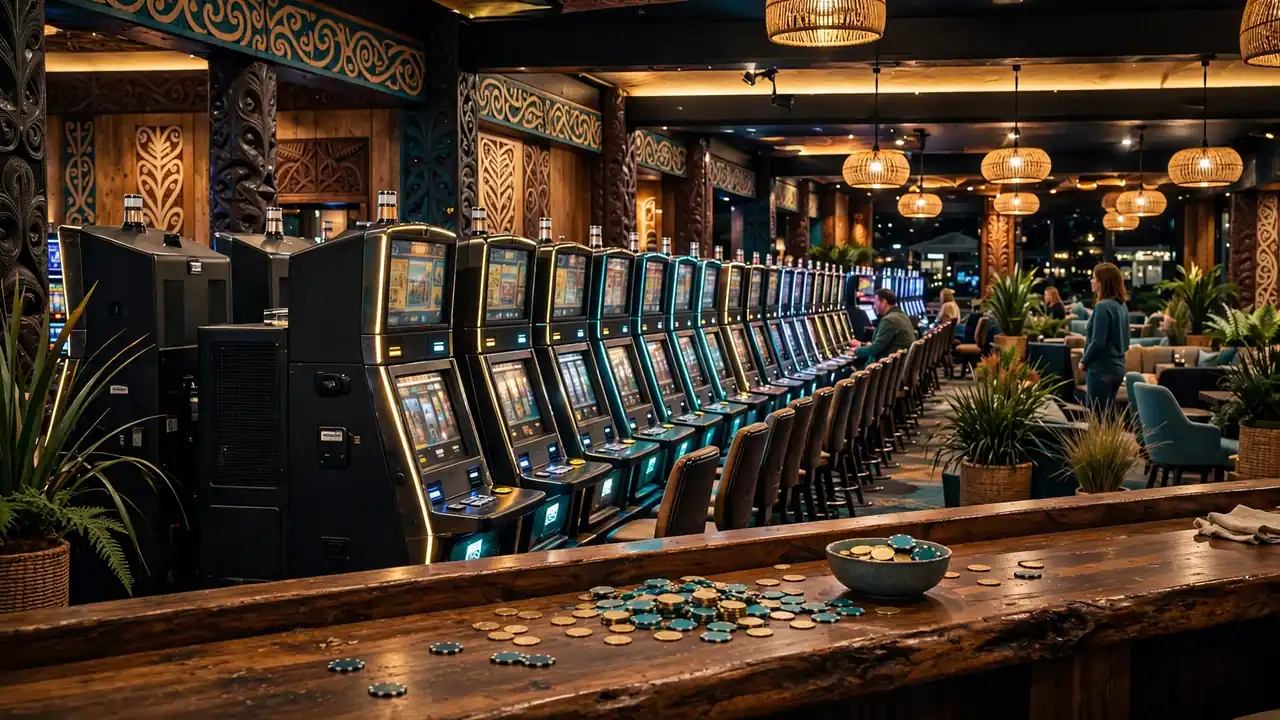
So, when you see a claim that you can play casino games with Bitcoin, read it narrowly: it may indicate a payment option, not a particular game, game feature or standard of oversight. The game catalogue and its rules are separate questions from how you fund an account.
How to Check a Casino Site’s Status and Protect Your Account
A Bitcoin deposit option tells you how a site accepts funds; it does not show that the site is licensed in New Zealand. Offshore crypto casinos are not currently licensed by the Department of Internal Affairs (DIA), and they do not have domestic New Zealand regulatory oversight or consumer protections. Treat payment features and regulatory status as separate questions.
To check a site’s claims, look for a clear statement of which company operates it and which regulator, if any, issued its licence. Then compare that claim with the regulator’s own records. A logo or licence number displayed on a casino page is not, by itself, confirmation. If you cannot establish who operates the site or verify its claimed authorisation, do not treat its Bitcoin support as evidence of trustworthiness.
Be wary of phrases such as “instant withdrawal” or “easy verification” when they are presented without conditions. Crypto payments do not remove a site’s ability to check your identity. A specialist review reports that crypto-friendly casinos may ask for identity documents before a first withdrawal, after a larger cashout, or when a security check is triggered. Reputable casinos still require identity verification, even when deposits are made in cryptocurrency. Read the site’s verification and account rules before depositing, and do not assume that a low-friction sign-up means you can withdraw without checks.
Account Protection
- Enable two-factor authentication on your casino account.
- Enable two-factor authentication on your associated email account.
- Use a dedicated crypto wallet for gambling-related transfers.
- Set deposit limits before you start playing.
- Keep your wallet recovery information private.
Protect access to your account and wallet separately. Use a dedicated crypto wallet for gambling-related transfers rather than keeping those funds alongside everyday holdings. Enable two-factor authentication on the casino account and on the email account used to access it. A password alone may not protect an account if it is reused or exposed elsewhere; a second authentication step makes an unauthorised login harder.
Set deposit limits before play and keep them within an amount you can afford to lose. A limit is useful only if it is set in advance and you do not raise it in response to losses. Keep your wallet recovery information private, and never send it to someone claiming to be casino support. Support staff do not need your recovery phrase to investigate an account issue.
Finally, check that the site’s written rules explain what happens to your account if verification is requested or access is restricted. If the terms are unclear, support cannot explain them, or the site asks you to disclose wallet secrets, stop before sending funds. These checks can reduce account and payment risks, but they cannot create domestic oversight where none exists.
What a Bitcoin Casino List Can—and Cannot—Tell You
A directory can help you identify sites that claim to accept Bitcoin, but inclusion is only a statement about the directory’s coverage. It does not, by itself, establish that a casino is licensed in New Zealand, independently checked, or able to provide local consumer protections. Treat a bitcoin casino list as a starting point for understanding what a site says it offers, not as evidence of its regulatory status.
That distinction matters in New Zealand. There are no online casinos licensed domestically, and offshore crypto casinos do not hold licences from the Department of Internal Affairs (DIA). A page describing a site as one of the best casinos with Bitcoin in New Zealand in 2026 cannot change those facts. A ranking, badge or favourable description is not a New Zealand licence.

Read the basis of inclusion
A list may group sites by a feature such as Bitcoin payments, promotions, games or withdrawal claims. Those categories answer different questions. A site appearing under a “Bitcoin” heading may mean only that the publisher says it accepts the currency. It does not tell you whether the site’s claims have been tested, whether its terms suit your circumstances, or whether a regulator in New Zealand supervises it.
Look for the explanation behind each entry. Does the page say how it assessed the casino, or does it mainly repeat promotional language? Does it distinguish between information supplied by the operator and details checked by the publisher? If the basis for inclusion is unclear, do not treat the ranking as a measure of reliability. This applies whether you are comparing a large directory, a small bitcoin casino site or a page calling itself a list of reliable Bitcoin casinos.
Separate promotional labels from evidence
Words such as “best,” “trusted” or “reliable” are conclusions, not proof. The same is true of claims about fast Bitcoin withdrawals: a listing may repeat an advertised feature without showing what happens in practice or explaining the conditions attached to it. The label “best Bitcoin casino affiliate” describes a publisher’s role, not a casino’s regulatory standing.
The directory’s purpose is also relevant. Some pages earn revenue when readers visit or register with listed operators. That does not automatically make every description inaccurate, but it means a favourable ranking should not be mistaken for independent regulatory approval. Check whether commercial relationships are disclosed and whether the page gives enough detail for you to understand how the ranking was produced.
Attention A directory or list is not a guarantee of reliability or regulatory status; it is merely a starting point for your own research.
A list may also be incomplete or out of date. Operators can change their payment options, terms or availability, while a directory may retain older descriptions. Before relying on any entry, compare it with the information displayed on the casino’s own site. That comparison can help establish what the operator currently claims; it still cannot establish New Zealand licensing or domestic oversight.
Use lists for comparison, not assurance
If you see a “casino with Bitcoin” described as suitable for Kiwis, separate the practical claim from the legal one. The site may say it accepts customers from New Zealand, but that wording is not evidence that it is authorised by a New Zealand regulator. Offshore sites do not carry domestic New Zealand regulatory oversight or consumer protections.
A list can therefore narrow your research, but it cannot certify a casino. Read each entry as a claim to verify, not as a guarantee. When a directory gives no clear basis for its ratings, or presents promotional language as if it were proof, its ranking tells you little beyond the publisher’s choice to include that operator.
Bitcoin Deposits, Confirmations and Withdrawal Timing
A Bitcoin payment has two separate stages: the network records the transaction, then the casino’s system credits it to your account. After you send BTC, your wallet may show the transfer as pending while it waits to be included in a block. The casino can detect the transaction before it is confirmed, but detection alone does not mean the balance is available to play.

A specialist review gives a reported deposit range of 1–3 blockchain confirmations, or roughly 10–30 minutes, before Bitcoin appears in a casino account. Treat that as an estimate, not a guaranteed service time. Network activity can affect how quickly a transaction is confirmed, and the casino’s own confirmation requirement affects when it credits the deposit. A transaction that remains unconfirmed has not yet completed this first stage.
Once the required confirmations arrive, the casino can match the incoming payment to your account and post the funds. If the transfer is delayed, check its status in your wallet or with a blockchain explorer using the transaction ID. A visible but unconfirmed transaction points to network processing; a confirmed transaction that is not credited points to the casino’s payment processing. Keep the transaction record so you can provide it if you contact support.
A withdrawal runs in the opposite direction, but it adds a step controlled by the casino. The casino must approve your request before it sends BTC to your wallet. Only after it broadcasts the payment does blockchain processing begin. A specialist review reports that withdrawals at leading crypto casinos can take 5–30 minutes to process once approved; that figure describes the post-approval stage, not the full time from request to receipt. Casino review and network confirmation are separate sources of delay.
This distinction helps you interpret a status label. “Pending” may mean the casino has not approved the request, or that an approved payment has not yet been confirmed on the network. Look for whether a transaction ID has been issued: without one, the payment may not have been broadcast; with one, you can check its on-chain progress. The total withdrawal time therefore depends on both casino approval and blockchain processing, rather than on Bitcoin alone.
Withdrawal Process
Open the casino’s withdrawal section, select Bitcoin, and enter your wallet address and the amount.
Wait for the casino to approve your request; they must authorize the transaction before it is sent.
Once the casino broadcasts the payment, wait for the required blockchain confirmations to appear in your wallet.
Transaction fees also vary with network activity and the cryptocurrency used. A fee can affect the cost of a transfer, while confirmation timing affects when it is recorded. Neither the deposit estimate nor a casino’s stated processing window guarantees the time your account or wallet will show spendable funds.
Free Chips and Spins: Check the Conditions Before You Count Them
A free-chip or free-spin claim is a promotion to examine, not money you can assume is available to withdraw. The label alone does not tell you whether an offer is active, who can claim it, or what conditions apply. Treat claims about a free Bitcoin casino signup bonus or free spins as unconfirmed until you can read the terms attached to the offer.
Start by checking how the offer is activated. It may require a code, a particular registration route, or a qualifying deposit; the wording should make clear which, if any, applies. Check the eligibility rules as well. An offer may be limited by location, account status, or other stated criteria. If those details are unclear or the terms cannot be found, you cannot reliably judge what the promotion provides.
Next, separate the promotional amount from withdrawable funds. Terms may specify which games count toward any playthrough requirement, whether winnings are capped, and whether a maximum stake applies while an offer is active. These are points to verify, not conditions to assume. A displayed balance that includes promotional credit does not, by itself, show how much you can withdraw. Read the rules for both the bonus and any winnings linked to it, including expiry conditions and the steps required before a withdrawal can be requested.

Free spins also need a close reading. Check which game they apply to, when they must be used, and how any resulting winnings are treated. A reference to a particular provider or game in promotional wording is not enough to establish that the spins are available to every account or that their winnings are unrestricted.
The word “VIP” is another label, not a description of a guaranteed benefit. If a bitcoin casino advertises VIP access, look for the actual terms: what qualifies an account, what benefits are described, and whether those benefits depend on continued activity. Do not treat VIP wording as evidence that a site is reliable or that a promotion has value you can realise.
Promotional checks and identity checks are separate. A bonus may be credited without resolving whether a withdrawal can be approved. A specialist review reports that some casinos may request identity checks when a withdrawal reaches a large threshold or when anti-fraud checks are triggered; that is a reported possibility, not a rule that applies identically to every site. Reputable casinos still require identity verification even when deposits are made with cryptocurrency. Be prepared for a request to establish who you are before funds are released, and check the site’s stated process before relying on a promotion.
A useful test is simple: can you find the offer’s eligibility, activation steps, restrictions, withdrawal treatment, and verification requirements in readable terms? If not, leave the promotional value out of your decision. A claim of free chips or spins is not a substitute for clear conditions.
Bitcoin Casino Bonuses and the Value of Your Balance
A Bitcoin casino bonus can be displayed as a coin amount, but that figure is not a fixed New Zealand-dollar value. If the bonus is denominated in BTC, its NZD equivalent depends on Bitcoin’s price when you check or convert it. The number of BTC may stay the same while its value in dollars changes.
Because Bitcoin is volatile, the NZD value of a bonus or balance can change significantly between the time it is displayed and the time it is withdrawn.
A specialist review notes that a balance held in a volatile coin can rise or fall in value. That applies to bonus funds as well as deposited funds if the account records them in that coin. A displayed bonus is therefore not, by itself, a promise of a particular NZD amount.
Check which unit the casino uses for the bonus and for your playable balance. If both are shown in BTC, compare the coin amount separately from any NZD estimate on the screen. A dollar estimate is a conversion at a point in time; it can change as the exchange rate moves. If the bonus is instead recorded in a fixed fiat currency, the coin amount needed to represent it may change when converted. Do not assume the display format tells you which arrangement applies: read the account’s stated currency and how it handles conversion.
The same distinction matters when you later assess what the balance is worth. The NZD value at the time you receive or view a bonus may differ from its value when you withdraw or convert it. A favourable price movement can increase that value; an adverse movement can reduce it. The casino’s displayed estimate and the amount you ultimately receive are not necessarily identical, because conversion rates and transaction fees can affect the result. Fees also vary with network activity and the cryptocurrency used.

Treat a crypto-denominated bonus as an amount of cryptocurrency, not as cash with a stable NZD equivalent. Before counting it toward your available funds, identify the denomination and consider that the exchange value can move independently of the bonus amount. That keeps the coin quantity and its changing dollar value separate in your decision.
How to Send Bitcoin to a Casino and Withdraw It to Your Wallet
Before sending anything, check the casino’s deposit instructions for the currency and blockchain network it accepts. Bitcoin sent over the wrong network, or to an address copied incorrectly, may not reach the intended destination. Network fees vary with activity and the cryptocurrency used, so check the amount shown by your wallet before confirming.
A specialist review describes this payment sequence; the exact screens and requirements can differ between sites:
- Open the casino’s cashier and select Bitcoin as the deposit method. Copy the displayed deposit address, or scan its QR code.
- In your personal crypto wallet—not directly from an exchange—choose Bitcoin and paste or scan that address. Check that the address matches the casino’s instructions and that the selected network is Bitcoin. Do not rely only on a familiar-looking first or last character.
- Enter the amount, review the address, network and fee, then confirm the transfer in your wallet.
The casino credits a deposit after the transaction receives blockchain confirmation. A transfer appearing in your wallet does not, by itself, mean the casino has credited it; check the casino balance and transaction status.
To withdraw, open the cashier’s withdrawal section and select Bitcoin. Enter the address of a wallet you control and the amount requested. Confirm that the destination address and network match the withdrawal instructions before submitting. Once the casino approves the request, it sends the Bitcoin to that address; blockchain confirmation is then needed before the transfer appears as received in your wallet. A withdrawal request is not the same as a completed transfer.
Use a personal wallet for withdrawals as well as deposits, and keep a record of the transaction ID. If an address is wrong, contact the site’s support promptly, but do not assume a completed blockchain transfer can be reversed. Bitcoin’s value in New Zealand dollars can change between deposit and withdrawal, so the same coin amount may not represent the same NZ-dollar value later.
Promotional wording, including claims about a no-deposit offer or a promo code, does not alter these payment steps. Check the offer’s conditions separately before relying on it, and do not send funds merely to test whether a promotion works.
Is it legal to play at offshore Bitcoin casinos in New Zealand?
Yes, New Zealand law does not make it illegal for individual players to use offshore casinos, including those accepting Bitcoin. The licensing rules apply to operators, and from 1 December 2026 operators wishing to offer online casino gambling to people in New Zealand will need a New Zealand licence.
Are Bitcoin casino winnings taxable in New Zealand?
No, recreational gambling winnings, including crypto casino winnings, are generally not subject to income tax in New Zealand.
Is crypto gambling legal in New Zealand?
Yes, individuals in New Zealand are not prohibited from using cryptocurrency at offshore online casinos. Local casinos cannot offer crypto games, and the licensing rules apply to operators rather than players.
Created by the ”Casino Bonus Guide NZ” editorial team.