
Casino Providers in NZ: Games and Platforms
 Available in US
Studios supply game catalogues, while software and platform providers support the systems, payments and payout processes behind a casino.

Table of Contents
- How Game Studios Shape a Casino’s Game Selection
- How Online Casino Providers Fit Into the NZ Market
- What Casino Software Companies Actually Provide
- How to Interpret a Casino Software Provider List
- What New Zealand’s Casino Licensing Transition Means for Providers
- What a White-Label Provider Means at the Software Layer
- The Platform Layer: Games, Payments and Payout Timing
- How Bonus Rules Affect the Value of a Game
- Where a Casino Solution Provider Sits in the Supply Chain
- What the Available Evidence Says About Live-Dealer Providers
How Game Studios Shape a Casino’s Game Selection
A casino’s game catalogue is not necessarily supplied by one studio. An online casino may combine games from several studios, and its provider portfolio affects which titles you can find on the site. When comparing casinos, therefore, the relevant question is not simply whether a site has games, but how the available selection fits what you want to play.
Each studio contributes its own catalogue. A casino that works with multiple studios can offer a broader selection than one drawing on a narrower group, although the number of providers alone does not tell you whether the catalogue will suit you. Two casinos may use some of the same studios and still present different selections. The titles available depend on which games each operator includes, so a provider’s presence does not establish that every game from its catalogue will be offered.
This distinction matters when you are looking for a particular kind of game. If you prefer pokies, for example, you might compare the available titles by their themes, features and pace of play. A longer catalogue can increase the chance of finding something that matches your preferences, but it does not automatically make every option relevant. A compact selection with games you enjoy may be more useful to you than a much larger collection that does not match your tastes.
Choosing a casino provider for New Zealand means weighing the information available about each option. Use these concise verdicts as a starting point for your own checks.
License: Tobique Gaming Commission, licence no. 0000064 Neospin lists a Tobique Gaming Commission licence, number 0000064. You can use this licence detail as a starting point when reviewing the operator.
License: Tobique Gaming Commission, licence no. 0000091 7Bit Casino lists a Tobique Gaming Commission licence, number 0000091. This gives you a specific licensing detail to consider when assessing the operator.
License: Malta Gaming Authority, licence no. MGA/B2C/370/2017 Play Grand lists a Malta Gaming Authority licence, number MGA/B2C/370/2017. You can refer to this detail when checking the operator’s licensing information.
License: Tobique Gaming Commission, licence no. 0000002 Ricky Casino lists a Tobique Gaming Commission licence, number 0000002. You can use the stated licence information as part of your review.
License: 07017519840 · Payout speed: 1-3 business days Zotabet lists licence number 07017519840 and gives a payout speed of 1–3 business days. These are the available details to consider when assessing the operator.
License: Malta Gaming Authority, licence no. MGA/B2C/394/2017 N1 Casino lists a Malta Gaming Authority licence, number MGA/B2C/394/2017. You can refer to this licensing detail when reviewing the operator.
Payout speed: 1-3 business days Lamabet gives a payout speed of 1–3 business days. You can take this stated timeframe into account when considering the operator.
Payout speed: 1-3 business days Wintino gives a payout speed of 1–3 business days. This is the available detail to use when reviewing the operator.
License: Curaçao Gaming Authority, licence no. OGL/2024/165/0185 BitStarz lists a Curaçao Gaming Authority licence, number OGL/2024/165/0185. You can use this stated licensing information as a starting point for your checks.
A provider list can help you understand part of that selection. It shows which studios are associated with the casino’s games, but it is only a starting point: the list does not, by itself, tell you which individual titles are available or how the casino presents them. You need to look at the games themselves to assess the range. The provider portfolio is one consideration when choosing a casino, rather than a substitute for checking its catalogue.
Compare the games, not just the provider count
Provider count is a rough indicator of how many sources contribute to a catalogue, not a score for its quality. Adding studios may introduce different game styles and mechanics, but the total count does not show how many titles are accessible to you or whether the offerings overlap. Nor does a long list prove that a casino has a strong selection in the category you care about.
Instead, consider whether the catalogue has enough variety in the areas you actually use. You can check whether the available games include different themes and playing styles, then compare their rules and features. If you return to a small group of familiar games, the presence of many other studios may matter less than whether those particular titles are available. If you like trying unfamiliar games, a wider mix of studios may be more relevant.

This approach also avoids treating the phrase “best casino game providers” as if it had one universal answer. A studio’s catalogue may appeal to one player and not another. What matters for your choice is the fit between the games you want and the games a casino makes available—not a provider’s name in isolation.
Availability does not determine every game condition
Finding the same title at two casinos does not guarantee that every condition attached to it will match. A game’s maximum bet can differ between operators because commercial agreements vary. That means the title alone may not tell you the permitted stake at a particular site; check the game or operator information where the limit is stated.
A specialist review has reported standard slot maximums at listed operators in the NZ$100–NZ$500-per-spin range, with high-limit slots reaching NZ$1,000–NZ$2,500. These are figures reported in that type of review, not a fixed rule for every casino or game. Limits can depend on the operator and the applicable agreement, so do not assume that a reported range applies to a title you are considering.
The practical comparison is between the catalogue and the terms for the specific games within it. A casino may have a provider whose games interest you, while a particular title may not be offered there or may have conditions that differ from those at another operator. Checking both availability and the stated maximum bet gives you a more accurate picture than relying on the studio name alone.
Standard slot maximums at listed operators are often reported in the NZ$100–NZ$500-per-spin range, with some high-limit slots reaching NZ$1,000–NZ$2,500.
Provider choice can also be relevant when you are comparing casinos that otherwise appear to offer similar games. If both sites carry titles from multiple studios, compare the actual selection rather than assuming their catalogues are identical. If a game you want is absent, the studio list cannot make it available; if it is present, the game’s own information is still what you need to check.
A useful selection check is therefore simple: identify the kinds of games you want, confirm that the casino offers them, and review any stated limits for those titles. The studios behind the catalogue help explain where the games come from and why selections can differ between casinos. They do not, on their own, establish which catalogue is best for you.
How Online Casino Providers Fit Into the NZ Market
The word “provider” can refer to different businesses in an online casino’s supply chain. A casino operator is the business responsible for the gambling service presented to customers: it runs the site, sets its customer-facing terms and manages the relationship with people who use it. A game provider, by contrast, supplies games to operators. The two roles may be connected commercially, but they are not interchangeable.
That distinction matters when you assess an online casino provider. A company whose games appear on a casino site is not necessarily the company operating that site. It does not follow that the game supplier handles customer accounts, decides the site’s terms or answers complaints about the operator’s service. Those responsibilities belong to the operator. If a problem concerns a particular game, the operator is still the customer-facing point of contact, even though another business supplied the game.

The same word is also used for companies associated with the broader technical service behind a casino. In ordinary discussion, “online casino provider” might therefore mean a game studio, an operator, or a business supplying some part of the service. Before comparing companies, identify which role is meant. Otherwise, two names can look comparable while referring to different layers of the market.
For Kiwi players, that distinction is relevant because New Zealand residents may access offshore gambling websites. A site being reachable from New Zealand does not, by itself, show that its operator is a New Zealand business or that the companies supplying its games are locally based. Nor does the presence of familiar games identify who is responsible for operating the site. Access, ownership and supply are separate questions.
A practical way to read a casino’s provider information is to separate the visible service from the businesses behind it. The operator is the entity presenting the casino to customers. A game supplier is associated with the titles offered there. A platform supplier, where that term is used, may refer to a business connected with the technology used to run the service. These labels describe different functions; they do not establish that one company performs all of them.
This is why searches for the biggest or best online casino providers can produce confusing results. A list may place operators beside game studios, even though their roles differ. A company with a large presence in the game market is not automatically an operator, and an operator’s name does not tell you which businesses supply its games. The useful comparison depends on what you are trying to understand: who runs the site, who supplies its games, or who provides another part of its service.
Different roles in the market
The term “online casino provider” can refer to several different types of businesses: a game studio that supplies the titles, a casino operator that runs the gambling service, or a platform supplier providing technical services.
The distinction also applies to live casino terminology. A live casino provider may mean a business associated with live-dealer games, while an operator is the site through which customers access a gambling service. The label alone does not establish which operator uses a particular supplier, what games are available at a given site, or who is responsible for customer-facing decisions. Those points need to be checked at the level they concern.
Newer companies entering the market do not change the underlying distinction. “New provider” may describe a recently established supplier, a company newly appearing on a casino site, or a newly available operator. These are different developments. A supplier can be new to one site without being new to the wider market, while a new operator may use businesses that have supplied games elsewhere. Treating “new” as a single category can obscure what has actually changed.
Market access also does not mean that offshore gambling websites provide New Zealand regulatory oversight or local dispute resolution. Before the current licensing framework, offshore online gambling was not licensed or supervised by a New Zealand regulator, and customers wagering with an offshore website had no domestic government recourse. The fact that a website can be accessed is therefore not the same as a guarantee of local protections. You should distinguish technical availability from regulatory status and from the identity of the businesses in the supply chain.

Advertising is another part of the relationship between offshore services and New Zealand. The Department of Internal Affairs ordered 20Bet to stop all targeted promotional activity aimed at New Zealand players. That action concerned marketing directed at people in New Zealand; it does not make the game supplier and the casino operator the same entity. It illustrates why the business behind an advertisement, the business running a site and the businesses supplying content should be identified separately.
When a provider name appears in a casino’s materials, read it as evidence about that particular role, not as a description of the whole service. Ask whether the name belongs to the operator or to a supplier, and keep the answer tied to the function being discussed. This lets you interpret the NZ market without assuming that a site’s accessibility, its games and its operating responsibilities all come from one company.
What Casino Software Companies Actually Provide
A casino software provider works on the game itself: it is a company involved in creating the software that makes an online casino game function. The casino operator has a different role. It runs the website or app through which you access gambling services. The two roles can be connected, but they are not interchangeable: the company that develops a game is not necessarily the company that operates the site where you play it.
That distinction helps make sense of the phrase “casino software.” It does not simply mean the website’s appearance or the system that handles a player’s account. In this context, it points to the software behind online casino games. A provider’s work is therefore associated with the game’s programmed behaviour, while the operator is responsible for making the casino service available to its customers.
Casino software provider
A company involved in creating the software that makes an online casino game function, focusing on the game’s programmed behaviour.
When you open a game on a casino site, you are interacting with software developed for that game, within a service provided by the operator. Seeing a familiar game title on a site does not, by itself, tell you who operates the site. Likewise, identifying the operator does not establish who developed every game it offers. These are separate parts of the arrangement, and a name attached to one part should not be assumed to identify the other.
The software layer and game outcomes
For games that use a random number generator, the software’s handling of random outcomes is one point that can be examined independently. RNG certification is generally performed by specialist testing organisations, including iTech Labs and eCOGRA. These organisations audit software to check that its outcomes are statistically random.
Certification concerns the software being tested; it is not the same thing as the casino operating the site. Nor does the existence of an audit mean that the testing organisation runs the game or provides the casino service. Keeping those functions separate makes the meaning of a certification claim clearer: it relates to a technical assessment of game software, rather than serving as a general description of the operator.

This also shows why the word “provider” needs context. In a casino setting, it may refer to a company that develops games, but it can also be used more broadly in discussions about other parts of the service. If a statement says that a provider is associated with a game, the relevant question is whether it identifies the developer, the operator, or some other supplier. Without that distinction, a provider label can sound more informative than it is.
A game’s software is not the casino’s entire service. The operator is the entity presenting the site to you and making its gambling offering available. The game developer’s role concerns the game software. You should therefore treat claims about a game’s development and claims about the casino’s operation as separate claims, even when both appear on the same page or in the same promotional material.
What a provider label can tell you
A reference to a casino software provider can help identify the company associated with developing a game. It does not automatically establish who operates the casino, how the operator manages its website, or what terms apply to a player’s account. Those matters belong to the operation of the casino service, not to the basic meaning of game software.
The label also does not explain, on its own, how a game was assessed. If an operator or game description mentions testing, look for what the statement actually says: an RNG audit concerns whether outcomes are statistically random. It should not be read as a blanket assessment of every part of the casino, because the audit described is about software.
Separate roles
A company’s connection to game development describes the game layer, but it is not a substitute for understanding the operator’s role.
The same care applies when comparing claims about software companies. A company’s connection to game development tells you something about the game layer, but it is not a substitute for understanding the operator’s role. A casino can make games available through its service without being the developer of each one. Conversely, knowing a developer’s name does not tell you which operator is responsible for the site through which the game is accessed.
This separation is useful whenever you encounter phrases such as casino gaming software provider or online casino software company. Ask what the phrase refers to in that particular context. If it points to the company behind a game, it is describing development. If it points to the business running the site, it is describing operation. The distinction is not merely wording: it prevents you from attributing a game’s software, a technical audit, and the casino service to the same organisation without evidence.
A software provider is therefore best understood as part of the game-development layer. The casino operator remains the point of distinction for the site itself. Once you separate those roles, provider-related statements become easier to interpret without treating a developer as the casino or assuming that a casino operator created every game it makes available.
How to Interpret a Casino Software Provider List
A provider list is useful only when you know what it describes. It may identify game studios associated with a casino, but it does not, by itself, tell you how complete the list is, which games each studio supplies, or whether every title shown is available to you. Treat it as a guide to the casino’s stated provider range, not as a full inventory or a measure of quality.
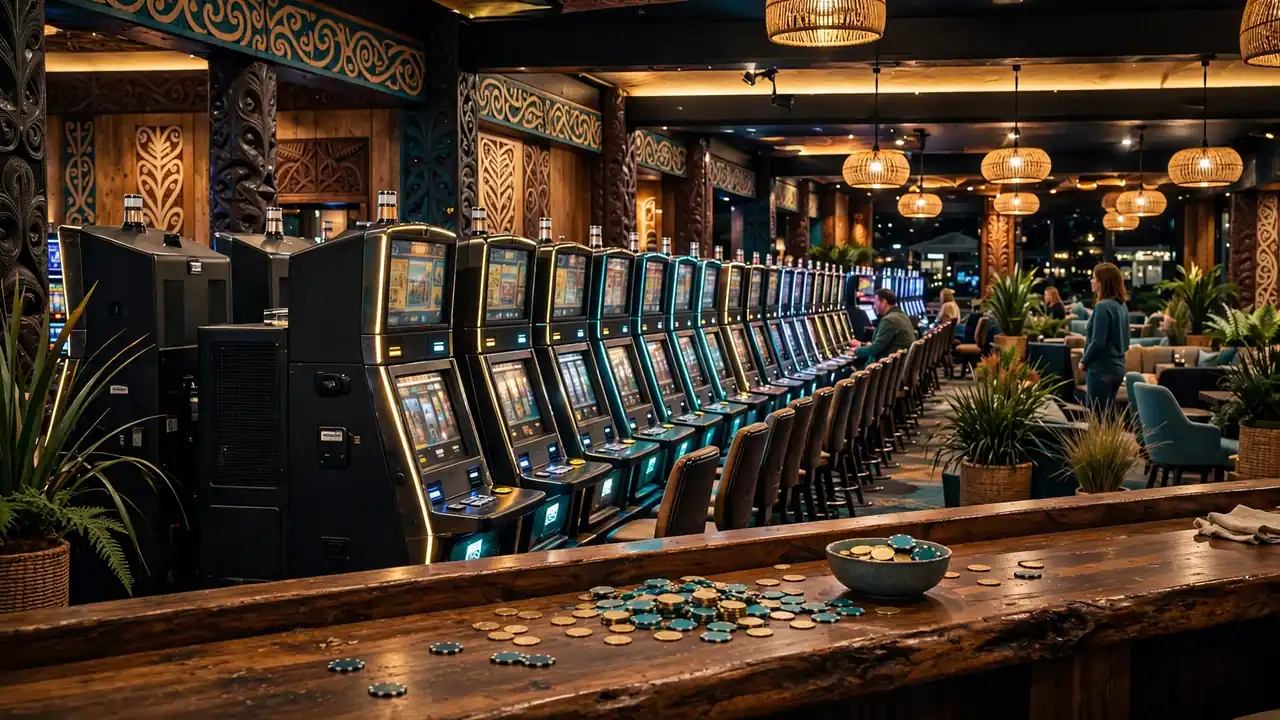
One casino can use multiple game studios. That means a list can contain several names without implying that any one studio supplies the entire game catalogue. It also means that a short list should not automatically be read as proof that the casino has few games: the list may be selective, or it may describe only part of the offering. The provider names matter as a point of comparison, but the list needs context before it can answer a specific question about a casino.
What a list can tell you
A provider list can help you check whether a casino names the studios connected with its games. If you recognise a studio, that can help you identify a portion of the catalogue to explore. If you are comparing casinos, you can also note whether their stated provider ranges overlap or differ.
Those observations remain limited. A name on a list does not show how many games come from that studio, which particular titles are included, or whether those titles are accessible in your account. Nor does the number of names establish that one casino has better games than another. The list is a starting point for checking the actual catalogue, not a substitute for doing so.
A “biggest” list needs an explicit basis for comparison. It might count studios, games, or some other measure; without a stated measure, the label does not produce a meaningful ranking. A long list is not automatically more useful than a short one, and a larger provider portfolio alone cannot establish that a casino suits your preferences.
- Use provider lists as a starting point to explore a catalogue
- Verify the actual games and stated limits available to you
- Assume a provider list is a full inventory of every game
- Treat a provider’s name as a substitute for checking game terms
What it cannot establish
A provider list does not establish that the named studios supply every game at the casino. It also cannot support a complete list of online casino game software providers across the market: the fact that casinos may use multiple studios does not make any one casino’s list comprehensive.
The same caution applies when a list is attached to a real-money casino or described as relevant to a particular payment method. A payment label does not identify which studios supply the games. You need information about the casino’s games and providers separately; one category should not be treated as evidence for the other.
Before relying on a list, check what it actually covers. Is it presented as the casino’s full provider range, or merely as selected examples? Does it connect the names to games you can view? Is the information specific to that casino rather than a general directory? If those details are unclear, the list can still orient you, but it cannot settle the question.
The practical approach is to use provider names as one consideration when comparing casinos, then verify the games themselves in the casino’s catalogue. Keep the distinction clear: a provider list describes associations between a casino and game studios; it is not a complete catalogue, a quality ranking, or proof that every listed game is available to you.
What New Zealand’s Casino Licensing Transition Means for Providers
New Zealand’s move to a domestic online casino licensing system changes the regulatory setting in which casino businesses operate. The Online Casino Gambling Act 2026 established that framework and took effect on 1 May 2026. It is the country’s first domestic licensing regime for online casino gambling; previously, gambling websites based offshore were not licensed or supervised by a New Zealand regulator.

The Act assigns related but distinct responsibilities to the Department of Internal Affairs (DIA) and the Gambling Commission. The DIA is New Zealand’s primary gambling regulator and oversees the online casino licensing framework. The Gambling Commission handles licensing decisions: it hears and determines applications, issues online casino licences, and approves changes to licence conditions. In practical terms, the DIA’s oversight role is not the same as the Commission’s authority to decide whether an application is granted or a licence condition changed.
That distinction matters when you assess a casino business or the providers connected with it. A company supplying games is not, merely by supplying them, the same entity as the operator responsible for running a gambling website. The licensing framework concerns the provision of online casino gambling, and the relevant regulatory responsibilities sit with the DIA and the Gambling Commission. A provider name on a casino’s games page does not, by itself, tell you whether the operator has a licence or what conditions apply to its business.
The transition is not immediate for every existing service. The Act provides a temporary period from 1 May 2026 to 1 December 2026. Operators that were already serving people in New Zealand before the Act began may continue during that period, subject to the Act’s transitional provisions. This temporary permission should not be confused with a full licence: the licensed system is not expected to be fully operational until 2027.
Regulatory status
Technical accessibility from New Zealand does not guarantee that an offshore website is locally licensed or subject to New Zealand regulatory oversight.
The legal position also differs from the period before the Act. Under the Gambling Act 2003, online casinos could not be based in New Zealand. Offshore gambling websites could nevertheless be accessed by New Zealand residents, but they were not under New Zealand regulatory supervision. A customer using such a site had no domestic government recourse. The new framework introduces a path to local licensing; it does not make every offshore service locally licensed or bring every provider within New Zealand oversight.
For a reader comparing casino providers, the useful regulatory question is therefore not simply which studios appear in a game catalogue. It is whether the gambling operation has the status required under the rules that apply at the time, and whether the relevant licence conditions have been approved by the Commission. The DIA’s oversight and the Commission’s licensing decisions form the institutional structure behind that assessment, but neither role should be read as a general endorsement of every game or supplier associated with an operator.
This article contains affiliate links and partnerships. That does not change the distinction between regulatory oversight and licensing decisions, or establish that any particular casino or provider is licensed.
What a White-Label Provider Means at the Software Layer
“White label” describes a product or service made available for another business to present under its own brand. Applied to casino software, the phrase points to a possible arrangement between a company supplying software and the casino business that presents the service to customers. It does not, by itself, identify which parts of the casino are supplied by which company.

The software layer concerns the companies behind the development of online casino games. A white-label arrangement may be discussed in that context, but the label alone does not establish that a provider created particular games, operates a casino website, or manages every part of the service. Those are separate roles, and the term should not be treated as proof that one company performs them all.
For you, the useful distinction is between branding and responsibility. A casino may appear to customers under one name while relying on another business for some software-related function. Seeing a brand on a site does not reveal who developed its games, and describing a business as a white-label provider does not establish the exact scope of its work. The arrangement needs to be understood from what the parties actually provide, rather than inferred from the label.
The same caution applies when the phrase is combined with “crypto.” That wording may describe a service marketed toward cryptocurrency use, but it does not tell you who developed the games or what software is included. It also does not establish that a particular provider offers such a service. The phrase is not a technical specification.
So, treat “white-label casino provider” as a description of a possible commercial relationship, not as a complete account of a casino’s technical setup. To understand the software layer, separate the company that develops games from the business presenting the casino, then identify what role is actually being claimed. Without that distinction, branding can make different functions look like one.
Supply the individual titles and game mechanics found in the catalogue.
Handle the operating layer, including account functions and payment requests.
Run the website and manage the relationship with the players.
The Platform Layer: Games, Payments and Payout Timing
A casino platform is the operating layer you interact with: it presents the site, connects account functions and handles payment requests. Game studios supply titles that the platform makes available. One casino can therefore combine games from multiple studios, while the platform remains the place where you sign in, choose a payment method and request a withdrawal. The studio and the platform have different roles, even when their services meet on the same screen.
That distinction matters when you compare providers. A studio’s name tells you who made a game; it does not, by itself, explain how the casino processes deposits or payouts. Those are platform and operator functions. A list of game suppliers can help you understand which studios appear at a casino, but it cannot establish how quickly that casino will approve a withdrawal.
Payment timing depends partly on the method. A specialist review reports that e-wallet withdrawals can arrive within 24 hours, while bank transfers may take two to five business days. Treat those figures as reported timings, not a guaranteed schedule for every transaction. A withdrawal can involve separate steps: the casino processes the request, then the payment method transfers the funds. The cited timings do not specify how much time each step takes, so the method alone cannot tell you when a particular payout will arrive.
For a Kiwi player using an offshore site, a short processing estimate should not be confused with local oversight. Offshore gambling websites may be accessible, but using one does not give you access to New Zealand regulatory oversight or domestic dispute resolution. Check the site’s own payment terms before relying on a stated timeframe, and distinguish an estimate from a commitment.
When assessing a casino platform provider, keep the questions separate: which studios supply games, which payment methods the site supports, and what timing the site states for each withdrawal route. “Top casino providers” is not a useful single category if it blurs these functions. A game supplier does not set the bank’s transfer speed, and a fast payment route does not establish anything about the studios behind the games.
This content contains affiliate links.
How Bonus Rules Affect the Value of a Game
A bonus does not become withdrawable simply because it appears in your balance. Its value depends on the conditions attached to it, especially the wagering requirement: the amount that must be staked before bonus-related winnings can be withdrawn.
The requirement may apply to the bonus alone or to the bonus plus your deposit. Those are different calculations. If the deposit is included, the total wagering target is larger than a bonus-only target for the same offer. Before accepting a promotion, check which amount forms the basis of the requirement and whether the rules specify how eligible wagers count.
Published figures are not consistent. Some specialist reviews describe New Zealand welcome-bonus requirements in the x25–x40 range, while another set of specialist review material gives 30x–50x. These figures should not be treated as a fixed market standard or as a promise about a particular offer. The terms attached to the offer determine the actual target.
Bonus verification
- Check if wagering requirements apply to the bonus alone or the deposit plus bonus
- Identify the specific wagering multiplier (e.g., x30)
- Confirm the bonus expiry deadline
Expiry adds a second constraint. A specialist review reports that bonuses commonly expire within 7 to 30 days, but the deadline is offer-specific. If the wagering target is not met before expiry, the remaining time to complete it is lost; the bonus rules determine what happens to the bonus and any associated winnings. Check the expiry point as well as the wagering calculation, because a requirement that looks manageable in isolation may be harder to complete within a short window.
This is how bonus rules affect the value of playing a game: they define the work required before funds can be withdrawn and the time available to do it. A game’s provider does not, by itself, establish the bonus conditions. Those conditions belong to the casino’s offer, so read the relevant terms rather than assuming that a promotion applies equally across every game or provider.
Where a Casino Solution Provider Sits in the Supply Chain
The phrase “casino solution provider” can describe a company positioned between the game studios and the casino operator, or a business whose role spans more than one part of that chain. The label alone does not tell you which tasks it performs. To understand the structure, separate the roles rather than treating every company connected with a casino as the same kind of supplier.
A casino operator runs the site and makes the games available to its customers. Game studios supply titles, and an operator may work with multiple studios. This means the operator’s provider relationships form one layer of the supply chain; they do not, by themselves, establish that a separate solution provider owns or operates the casino.
A broader provider might be involved in connecting parts of the supply chain, but you should not infer a particular service from the word “solution”. It does not establish that a company develops games, operates a casino, or performs both roles. Those are distinct functions, and a company’s position needs to be understood from what it actually does.
When you encounter the term, look for a clear description of the company’s relationship with the operator and the studios. If that description is absent, the label gives you little basis for deciding where the company sits. The practical distinction is straightforward: game studios supply games, operators run casino sites, and a broader solution-provider label needs further explanation before it can be assigned a precise place in the chain.
What the Available Evidence Says About Live-Dealer Providers
A casino’s live-dealer games may come from a different studio mix than its other titles. The casino can bring together games from multiple studios, so the provider names associated with a site can help you understand where its catalogue comes from. That does not, by itself, identify which studio supplies a particular live table.
When comparing live-dealer games, keep the studio and the individual game separate. A provider name describes a source of games; it does not establish the table formats, dealer presentation or rules available on a particular casino site. Those details belong to the individual titles and the operator’s current catalogue.
This distinction matters when a site displays provider logos alongside live games. A logo may indicate that a studio supplies some content, but it is not enough to infer that every live-dealer title on the site comes from that studio. The catalogue can combine multiple suppliers, and its contents may vary between casinos.
For you, the practical point is to inspect the live section itself rather than treating a provider label as a feature comparison. Check which tables are listed and read the information attached to each game. A broad provider portfolio may indicate that a casino draws on several studios, but the names alone do not tell you how its live tables differ.
The term “live-dealer provider” can refer loosely to a studio associated with live casino content, but it should not be read as a complete description of a site’s offering. The relevant unit for comparison is the actual game shown in the casino, not an assumed set of features attached to a supplier’s name.
Prepared by the Casino Bonus Guide NZ editorial staff.