Live Dealer Roulette in New Zealand: How It Works
 Available in US
A practical guide to live roulette access, table feeds, mobile play, house edge and the limits of betting systems.

Table of Contents
- How Live Roulette Works Online in New Zealand
- Why Free Live Roulette Practice Is Often Unavailable
- What to Check Before Using an Online Casino for Live Roulette
- How the Live Roulette Dealer and Table Feed Work
- Playing Live Roulette on a Smart Device
- Roulette Results, House Edge and Betting Systems
- European and American Live Roulette: The House-Edge Difference
- Low-Stakes Live Roulette and the Limits of Strategy
- Using Live Roulette Apps: Practical Tips for a Stable Session
- Can You Win at Live Dealer Roulette?
How Live Roulette Works Online in New Zealand
Live roulette is an online casino table presented through a live video connection. You join a digital version of a table rather than playing against software that generates each round without a live dealer. The game is still accessed through an online casino account, but the table is part of the live dealer category, alongside other live table games.
For Kiwi players, access depends not only on the game but also on the rules governing the operator that offers it. New Zealand’s regulatory position is changing during 2026. The Online Casino Gambling Act 2026 took effect on 1 May, creating the country’s first domestic licensing framework for online casino gambling. Its transition provisions set a timetable for moving from the earlier offshore market to a regulated system.
Before that change, New Zealand had no domestic licensing framework for online casinos. The Gambling Act 2003 did not permit online casinos to be based in New Zealand, but that did not prohibit players from accessing offshore platforms. Kiwi players could use international sites offering live dealer games, including roulette. The distinction is between where an online casino is based and whether a player can access it from New Zealand.
Choosing live dealer roulette in New Zealand means finding an option that fits your preferences and checking what is known about its licensing and payouts. Use these short verdicts as a starting point for your own review.
License: Tobique Gaming Commission, licence no. 0000064 Neospin lists a licence from the Tobique Gaming Commission, licence no. 0000064. You can use that detail as a starting point when assessing the operator.
License: Tobique Gaming Commission, licence no. 0000091 7Bit Casino lists a Tobique Gaming Commission licence, no. 0000091. That licensing information is the confirmed detail available here for your review.
License: Malta Gaming Authority, licence no. MGA/B2C/370/2017 Play Grand lists a Malta Gaming Authority licence, no. MGA/B2C/370/2017. You can consider this licensing detail as part of your checks.
License: Tobique Gaming Commission, licence no. 0000002 Ricky Casino lists a Tobique Gaming Commission licence, no. 0000002. This gives you a specific licensing detail to review.
License: 07017519840 · Payout speed: 1-3 business days Zotabet lists licence number 07017519840 and a payout speed of 1–3 business days. These are the available details to consider when reviewing the operator.
License: Malta Gaming Authority, licence no. MGA/B2C/394/2017 N1 Casino lists a Malta Gaming Authority licence, no. MGA/B2C/394/2017. You can take this licensing information into account in your review.
Payout speed: 1-3 business days Lamabet lists a payout speed of 1–3 business days. You can use this stated timeframe as one point of reference.
Payout speed: 1-3 business days Wintino lists a payout speed of 1–3 business days. This is the available stated detail for your assessment.
License: Curaçao Gaming Authority, licence no. OGL/2024/165/0185 BitStarz lists a Curaçao Gaming Authority licence, no. OGL/2024/165/0185. You can consider this licensing information as part of your checks.
The new Act places live dealer tables within the same licence category as online pokies and digital table games. In other words, live roulette is not treated as a separate kind of gambling service for licensing purposes simply because it involves a dealer and a live table. The licence framework covers the online casino offering as a whole, including these different forms of play.
The legislation provides for a maximum of 15 licences across the online casino sector. That cap applies to the category containing live dealer games; it does not mean there is a separate set of licences reserved for roulette. From 1 December 2026, New Zealand players may be accepted under the new regime only by operators approved within that system. This is a change from the earlier position, when offshore casino services were available without New Zealand online casino licensing.
The period between the Act taking effect and the December transition date is important. Online casinos that were already providing services to people in New Zealand before 1 May 2026 may continue during this window under the transitional provisions. That temporary permission is not the same as holding a licence under the new framework, and the transition does not establish a permanent Kiwi-specific licence for offshore operators. New Zealand does not have a separate local licence designed specifically for an offshore casino serving Kiwi players.

This means that the phrase “live dealer roulette NZ” can refer to more than one situation. It may describe a table offered to a player located in New Zealand, even if the casino and its live operation are based overseas. It may also refer to a service operating under the new domestic licensing system once the relevant approvals are in place. The location of the player, the operator’s status and the date of access all matter when interpreting the phrase.
A live roulette table remains an online casino product even though its play is shown in real time. The live format does not itself determine whether an operator may accept New Zealand customers; that question is governed by the market’s licensing and transition rules. Nor does the existence of a live table establish that its operator has approval under the new regime. The regulatory status of the service and the way the game is delivered are separate issues.
For a player considering online live dealer roulette in 2026, the practical context is therefore date-sensitive. The Act began the transition on 1 May, while 1 December marks the point from which acceptance of New Zealand players is restricted to approved operators under the new rules. During the transition, pre-existing providers may continue under the Act’s conditions. The longer-term licensing system is expected to become fully operational in 2027, so the initial transition and the complete operation of the regime are not the same milestone.
New Zealand’s regulatory environment is transitioning due to the Online Casino Gambling Act 2026, which introduces a domestic licensing framework.
The key point is that live roulette is part of online casino gambling, not an exception to it. Its availability to Kiwi players has been possible through international or offshore sites, and the 2026 Act introduces a domestic licensing framework that changes which operators may serve the market as the transition proceeds. When considering access, keep the date and the operator’s position under that transition in view; the words “live roulette” alone do not tell you which regulatory stage applies.
Why Free Live Roulette Practice Is Often Unavailable
A free-play button is common in some online casino games, but it does not follow that every game has a free version. Live roulette is a different kind of service: a casino must pay to run a staffed table and professional studio, then make the game available through a live broadcast. Those operating costs continue whether or not a player places a wager. For that reason, live dealer games are typically not offered for free play.
This is the main difference between trying a game that runs entirely through casino software and joining a live table. In the first case, a free mode can reproduce the game without operating a live table. In live roulette, the casino is providing an ongoing, staffed service. A session with no-money play still uses that service, so the casino may choose not to provide it without wagers.
Why a live table may not have a demo mode
The word “demo” can describe different things. It might mean a simulation that runs without a live dealer, or it might mean access to the actual live table without real-money betting. These are not interchangeable. A simulated roulette game can offer practice with software-generated play, but it does not necessarily recreate the live table experience. Conversely, access to the actual live table involves the staffed operation that makes free access costly for the casino.

A casino may therefore offer a free version of a roulette game without offering free access to live roulette. The presence of a demo elsewhere on the site does not establish that the live version is included. Check the game itself for a clearly stated free-play option rather than relying on a general “demo games” label.
If no free mode is shown, that does not mean you have missed a hidden setting. The casino may simply not provide one for that table. Availability can differ between games and operators, and the fact that one live table has a practice feature does not mean another will have the same feature.
What “free practice” can and cannot tell you
A free roulette simulation can help you become familiar with the layout and the sequence of making selections, if those elements are presented in the simulation. It cannot, by itself, confirm that the live version offers the same interface or experience. A practice mode tied to the live table would be a closer match, but it may not be available.
Be precise about what you want to practise. If your aim is to understand where selections appear on a roulette layout, a simulated game may be enough for that limited purpose. If you want to experience a live dealer session without wagering, you need a free-play option attached to the live game. One does not guarantee the other.
A label such as “fun mode” should also be read in context. It may refer to a free simulation rather than the live table. Look for an explicit indication that the mode is connected to the live dealer game and that no real-money wager is required. If the wording is unclear, do not assume that selecting the game will provide a free session.

No-money access is not the same as a free bet
A free-play mode and a promotional offer are different arrangements. A free-play mode lets you use a game without staking real money; a promotion may involve conditions or a wager made with real funds. Do not treat a bonus or other offer as proof that a live roulette table can be played without risk. Read the terms that apply to the specific offer and game before using it.
Likewise, the phrase “live dealer roulette challenge” does not establish that a free challenge exists. A challenge might be a name for a particular activity, but the name alone says nothing about whether the live table is free to enter. The same applies to searches for a free-play version: the relevant point is whether the casino explicitly provides that mode for the actual live game.
Check before expecting a free session
Before opening a table, look for a mode selector or a description that states whether free play is supported. If the only available option leads to a real-money game, treat it as a paid table rather than assuming that you can explore it first without wagering. A casino’s free roulette simulation may still be useful for basic familiarity, but it should not be mistaken for free access to a live dealer.
The distinction is practical: free access to a software simulation does not require the same staffed table and studio operation as live play. Because that operation carries significant costs, free live roulette practice is commonly unavailable. You can use a free mode when it is clearly offered, but its availability should be confirmed for the specific live game rather than inferred from other casino games.
What to Check Before Using an Online Casino for Live Roulette
Before registering, separate two questions: whether the operator is regulated where it is based, and whether it is permitted to serve Kiwi players under New Zealand’s changing rules. A site’s own claim that it is “licensed” does not answer either question by itself. Check who issued the licence, which legal entity holds it, and whether the regulator recognises that entity as an authorised gambling operator.
Operator Verification
- Identify the legal company name behind the brand
- Match the operator name with the official licence record
- Confirm the regulator recognises the entity as authorised
- Check that the licence covers online casino gambling
- Verify the licence status with the DIA
Look for the licence details in the site’s terms or regulatory information. The operator name should match the company identified in the licence record; a similar brand name is not enough to establish that they are the same business. Then check the regulator’s own public information, where available, rather than relying only on a badge or certificate displayed by the site. Confirm that the licence covers online casino gambling, not a different activity, and that its status is current. If the details cannot be matched, treat the operator’s regulatory claim as unverified.
New Zealand does not issue a Kiwi-specific gambling licence, and online casinos cannot be based domestically. The Department of Internal Affairs (DIA) is relevant to checking an operator’s status in the New Zealand regulatory context. Confirm the operator’s licence status with the DIA instead of assuming that a foreign licence automatically means the operator is approved to serve customers in New Zealand. A recognised overseas regulator and New Zealand’s own regulatory position are related checks, but they are not interchangeable.
The legal framework changed in 2026. The Online Casino Gambling Act 2026 took effect on 1 May and created New Zealand’s first domestic licensing system for online casino gambling. Its transition period runs from that date to 1 December 2026. Operators that were already serving people in New Zealand before the Act began may continue during the transition, subject to its provisions. From 1 December, only the 15 approved operators will be legally permitted to accept Kiwi players under the new regulations. The full licensed regime is expected to be operational in 2027.
This means the date of your check matters. An operator’s position during the transition does not by itself establish that it can continue accepting New Zealand players after the transition ends. If the site gives information about an application or its future status, verify that information with the DIA; do not treat a pending claim or an overseas licence as proof of approval under the new system.
For live dealer roulette, these checks apply to the casino operator, not just to the game table or its software provider. A familiar game label, a polished live section, or a dealer feed does not establish that the site itself is regulated. Make sure you can identify the legal company behind the service and find matching regulatory information before you provide personal or payment details.

Keep a record of the operator name, licence details, regulator and the date you checked them. If those details conflict across the site and regulator information, or the operator’s status cannot be confirmed, do not rely on its claims. A licence check cannot guarantee how a site will handle every dispute, but it can help you distinguish a verifiable regulatory status from an assertion made on a website.
How the Live Roulette Dealer and Table Feed Work
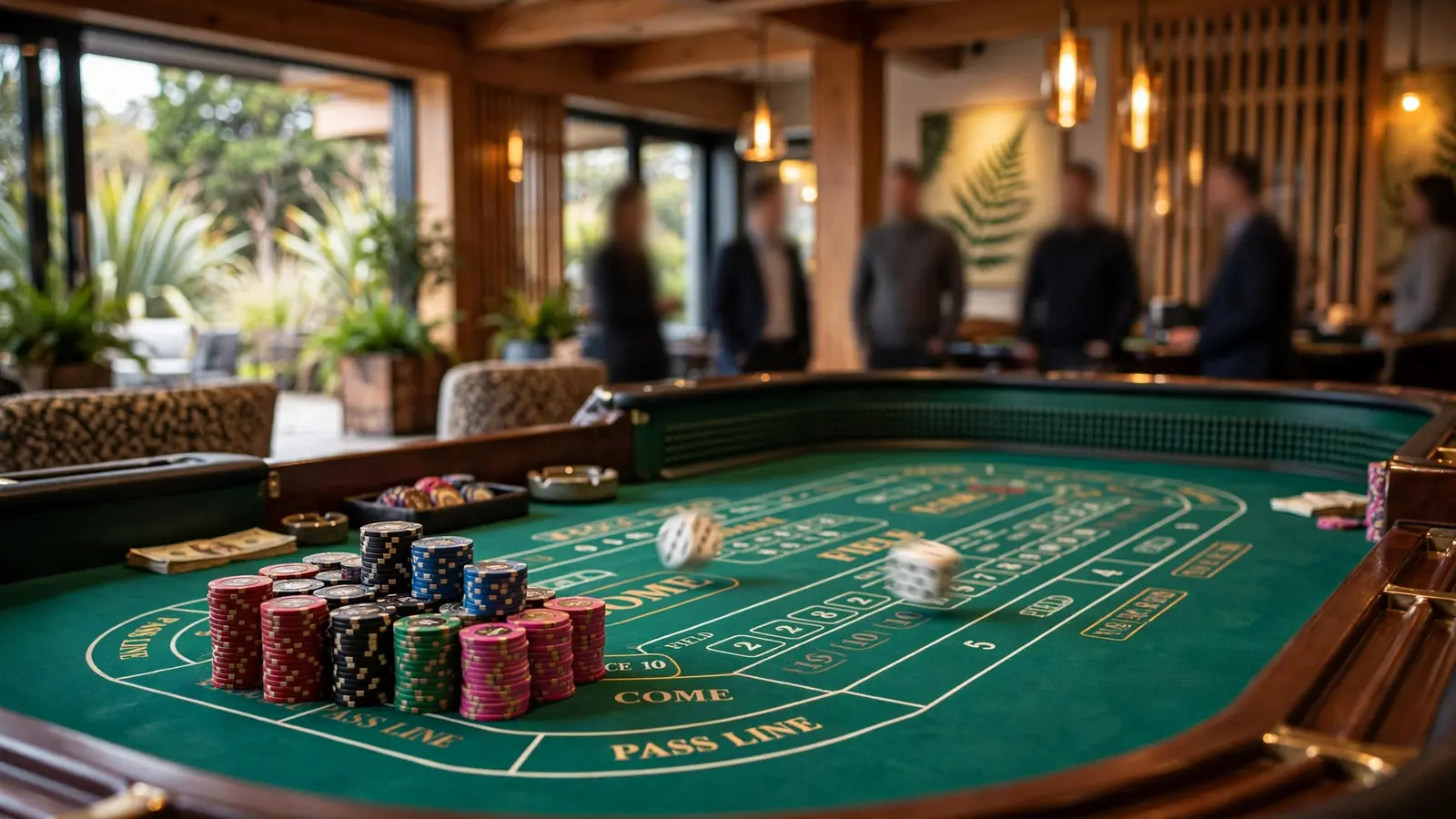
A live roulette table joins a physical game to a digital viewing interface. The wheel, ball and dealer are real, while the table is shown to you through a live video feed. The studio or casino provides the physical setting; the online interface carries the dealer’s image and the game’s activity to your screen.
The dealer is responsible for operating the table in view of the camera. The wheel is not a computer animation: the ball moves around a real wheel, and the dealer conducts the round in person. That physical setup is what distinguishes a live table from a digital roulette game, where software generates the wheel and result without a dealer performing the spin on camera.
The feed is the connection between those two environments. Cameras capture the table, and the stream lets you follow the dealer and the wheel as the game unfolds. Because the broadcast is live, you see the round as it happens rather than watching a recording. The game interface sits alongside the video, providing the digital controls and information needed to take part.
A live dealer is more than a picture on screen. Live dealer games allow players to interact with professional dealers through the online experience. The form of interaction depends on the game interface, but the central point is that the dealer is present at the physical table while players follow remotely. The dealer’s role is to conduct the game; the interface gives you a way to participate from outside the studio or casino.
This arrangement has two linked parts. At the table, the dealer operates the real equipment and the wheel determines the physical movement of the ball. In the online environment, the video feed shows that activity while the interface supports your connection to the game. The screen therefore combines a real event with software tools; it does not turn the wheel itself into a digital object.

Live roulette dealers may work in a dedicated studio or at a casino in a particular country. In either case, the broadcast connects the table to players in real time. A studio is the production setting for the game, while a country-based casino is a gambling venue that can host a live table. The setting can differ, but the key components remain the physical wheel, the professional dealer and the live video connection.
The feed also shapes what you can observe. You can watch the dealer and table rather than relying only on a result displayed by the interface. However, what appears on screen is still a camera view, not direct access to the physical equipment. Your experience depends on the video and the interface working together: the stream shows the table, and the online controls make remote participation possible.
The phrase “immersive” describes the presentation of a live table, not a separate kind of wheel or a guarantee about how the game behaves. Likewise, an RTP figure is not created by the dealer or the camera feed. The physical table supplies the live event; the software presents it to you. Keeping those roles distinct makes it easier to understand what you are seeing: a real dealer conducting roulette, transmitted through video and joined to an online interface.
Playing Live Roulette on a Smart Device
A smart device gives you a compact control point for a live roulette table: the dealer’s video feed appears on screen, while the game interface lets you follow the round and interact with the table. You can play roulette online with a live dealer without being in the studio; your view and actions are handled through the online service.
The feed is more than a recording. It carries the live table view, so you can watch the round as it happens and respond to the dealer’s prompts through the interface. The dealer remains a person on the other end of the connection, and some live dealer games allow players to interact with them. On a phone or tablet, that interaction takes place through the controls provided on screen rather than through direct contact with the physical table.
The device’s screen size affects how these elements fit together. A larger display can show more of the video and interface at once; on a smaller screen, you may need to switch between views or use compact controls. That changes how you see the table, not how the physical roulette round is conducted. The dealer continues the live game, while your device displays the feed and provides the means to take part.

It helps to distinguish the live video from the game controls. The video lets you observe the dealer and the round. The interface carries your selections back to the online game, where they are associated with the current play. If the display pauses or a control does not respond as expected, you may not be seeing a complete, up-to-date view of the session. Avoid assuming that a stalled image means the round itself has stopped; check the table’s on-screen status before acting again.
Specialist reviews have reported that live dealer games can encounter technical problems. A smart device does not remove that possibility: it is the access point for the same live service, not a separate version of the table. If the feed or controls become unreliable, the issue can interrupt your view or your interaction with the dealer. This is different from a purely digital game, where no live video connection to a dealer is part of the play.
For Kiwi players, the practical distinction is that live roulette on a smart device combines a real-time video experience with on-screen participation. You watch the dealer through the feed and use the device to engage with the round; the screen is the interface, not the roulette wheel.
Roulette Results, House Edge and Betting Systems
A live dealer roulette result is the outcome of an individual round, not a signal that tells you what the next round will produce. A run of one colour, a sequence of high numbers or a long gap between particular outcomes may look meaningful, but past results do not make a future result due. A betting screen can display previous outcomes; that record describes what has happened, not what must happen next.
The house edge is the game’s built-in mathematical advantage for the operator over repeated play. It does not predict the result of a particular spin, and it does not mean that every player loses every session. You can win a round or a session, but the edge remains part of the game’s structure. Live presentation does not change that underlying relationship: watching a dealer and wheel gives you a visible result, not a way to control it.
Betting Systems
A roulette system is a rule for choosing bets or changing their size after wins and losses. While these can organise your decisions, they cannot change the mathematical house edge or the outcome of the roulette wheel.
A live dealer roulette system usually means a rule for choosing bets or changing their size after wins and losses. Some systems keep stakes constant; others increase or reduce them according to a sequence. These rules can organise your decisions, but they cannot make an unfavourable probability favourable or remove the house edge. Changing the size of a bet changes how much you stand to gain or lose on that bet. It does not change the roulette wheel’s outcome.
Progression systems can also make risk harder to judge. If you raise a stake after a loss, the next bet exposes more money while leaving the previous loss intact. A later win may recover some or all of a sequence’s losses, depending on the stakes and result, but no system ensures that such a win arrives before your available funds or chosen limits are reached. Keeping a fixed stake avoids that particular escalation, but it does not turn roulette into a positive-expectation game.
Treat recorded live dealer roulette results as a history, not a forecast. A pattern in a short run may be striking without having predictive force. If you use a system, define what it changes—such as your stake choice—and do not mistake that personal rule for a change in the game’s odds. The most reliable way to understand a system is to separate its effect on your decisions from the random outcome it cannot determine.
European and American Live Roulette: The House-Edge Difference
The roulette variant matters because it changes the house edge: the casino’s mathematical advantage over time. For live European roulette, the stated edge is around 2.7%; for live American roulette, it is around 5.26%. The American version therefore has the higher edge, a difference of about 2.56 percentage points.
These figures describe the games’ underlying odds, not a prediction of what will happen in a particular session. A short run can produce results that differ sharply from the long-term expectation. The house edge does not mean that the casino takes a fixed share from each bet, nor does it determine when a particular wager will win. It is a measure of the advantage built into the game over repeated play.
When comparing European roulette at a live dealer table with an American live table, check the variant named in the game information rather than relying on the table’s appearance or title. The distinction is relevant even when both games are streamed with a real dealer: the live format does not erase the difference in the underlying odds. A video feed and physical wheel describe how the game is presented; the roulette variant determines which set of odds applies.
The percentage can also help you compare two tables without treating them as interchangeable. If the house edge is your main comparison point, the lower figure belongs to European roulette. That is a mathematical comparison, not a promise that a European table will produce a win or that an American table will produce a loss. Individual results remain uncertain.
A live dealer roulette demo, where available, may let you become familiar with a table’s layout and pace, but it should not be confused with a change to the game’s edge. The relevant comparison remains the variant shown for the table. Before playing, confirm whether it is European or American and read the displayed game rules. If the variant is unclear, the edge cannot be inferred reliably from a generic roulette label.
For Kiwi players choosing between the two formats, the practical distinction is therefore straightforward: European roulette carries the lower stated house edge, while American roulette carries the higher one. This gives you a way to compare the games mathematically, but it cannot identify a winning table or remove uncertainty from a live session.
Low-Stakes Live Roulette and the Limits of Strategy
Low stakes change how much money is exposed on each spin; they do not change how the wheel works. A smaller wager means a smaller win if it lands on a winning outcome, and a smaller loss if it does not. It can make each result less costly to your balance, but it cannot make a particular number or section of the wheel more likely to appear.
That distinction matters when choosing a live table. Check the minimum bet and the available betting options before joining, then compare the minimum with the amount you are prepared to risk. If the minimum is too large for your intended session, you may have less room to adjust your stake. A table’s low-stakes label is useful only if its actual limits suit your budget.
Bet size also affects how quickly your balance can change. Keeping wagers small can reduce the impact of an individual losing spin, while increasing them makes each loss more significant. Neither choice changes the probability attached to the roulette outcomes. A cautious stake can help control exposure, but it is not a way to secure a return.
The same limit applies to live dealer roulette strategy. A plan may specify when to place a bet, which outcomes to select or how much to stake. Those rules can organise your decisions and help you avoid changing your approach impulsively. They cannot influence the wheel or remove the casino’s mathematical advantage. A sequence of past results does not tell you what the next spin will produce.
This is why a betting plan should be treated as a way to manage behaviour, not as a prediction tool. Decide what you can afford to lose before playing, and do not treat a run of wins as evidence that future spins are more favourable. If your balance falls, increasing stakes to recover losses increases the amount at risk without improving the odds.
Low-stakes live roulette can make the financial consequences of each decision more manageable, provided the table’s minimum fits your budget. It does not turn roulette into a predictable game or make a strategy profitable by itself. You control your stake and whether you continue playing; you do not control the result.
Using Live Roulette Apps: Practical Tips for a Stable Session
A live roulette app has to keep two things working together: the video stream and the controls that send your actions to the table. If either connection becomes unreliable, the picture may freeze, controls may stop responding, or the displayed table state may lag. Specialist reviews report that live dealer games can encounter technical interruptions, so it is sensible to prepare for a disrupted session rather than assume the stream will remain uninterrupted.
Before opening a table, close apps and browser tabs you do not need. This reduces competing demands on your device and can help keep the video responsive. Use a stable internet connection, and avoid moving between networks during a round; a handover can interrupt the stream or require the app to reconnect. If the video becomes choppy, check whether other devices are using the same connection heavily.
Keep the app or browser in the foreground while you are playing. Switching away may pause or reload a session, depending on how the service handles background activity. If you use headphones, make sure the audio is routed correctly, but treat the on-screen table status and accepted-action indicators as more important than sound alone.
If the feed freezes or a control does not respond, pause before tapping repeatedly. First check whether the table is still connected and whether the interface shows that your action was accepted. Repeated inputs can make it harder to tell what the system received. If the session does not recover, use the app’s reconnect or refresh option, then confirm the table state before continuing. Do not assume a missing animation means the game has stopped or that an action was cancelled.
For live dealer roulette apps, a practical tip is to avoid starting a session when your device is nearly out of power or when you cannot keep it connected reliably. If a problem persists, stop using the table and contact the operator through its support channel; include a clear description of what happened, without sharing account credentials. These steps cannot prevent every interruption, but they make it easier to distinguish a temporary display problem from an action that the table has processed.
Can You Win at Live Dealer Roulette?
Yes. A live dealer roulette session can produce a winning result, but that does not mean you can predict where the next spin will land or make a win repeatable. Each result is uncertain, and a run of successful bets does not guarantee that the next one will succeed.
The useful distinction is between winning a session and having a reliable way to win over time. A session may end ahead because the results happened to favour your bets. That outcome is possible, but it does not show that a particular choice, pattern or timing method has changed the game’s probabilities. No betting approach can guarantee a profit.
The house edge describes the casino’s mathematical advantage across play, not a prediction of what will happen in your next round. For live European roulette, it is around 2.7%; for American roulette, it is around 5.26%. Those figures do not determine the result of an individual spin. They indicate why repeated play does not become a dependable source of profit simply because you have won before.
If you want to play, treat any win as an uncertain outcome rather than evidence that you have found a method. Set a limit on what you are prepared to lose, and stop when you reach it; neither continuing after a win nor trying to recover losses changes the underlying odds. The realistic answer to how to win at live dealer roulette is that you can win a round or session, but you cannot ensure that you will.
Can players deposit and withdraw using New Zealand dollars at live casinos?
Yes, many operators allow you to deposit and withdraw in New Zealand dollars. Payment methods and processing times vary; Neteller, Skrill and Bitcoin may offer faster transactions, while bank transfers can take 5 to 7 business days.
Can New Zealand players play real-money live dealer games at offshore casino sites?
Yes, you can access live dealer games at international or offshore gambling sites. Check that the operator is regulated by a recognised gambling body and confirm its licence status with the Department of Internal Affairs.
How many operators can hold a licence?
Up to 15 operators can be licensed in New Zealand’s online casino sector, which includes live dealer tables. From 1 December 2026, only approved operators may legally accept New Zealand players under the new rules.
Do live dealer games have a house edge?
Yes. Live European roulette usually has a house edge of about 2.7%, while American roulette is usually about 5.26%.
Which live dealer games can New Zealand players usually access?
You can commonly find live roulette, blackjack and baccarat. These games are streamed from a studio or casino, where you play in real time with a professional dealer.
What is a live casino dealer?
A live casino dealer is a professional who runs a real casino game, such as roulette, blackjack or baccarat, while it is broadcast online. You watch the live video feed and place bets through the casino’s online interface.
How do live casinos work?
A live casino streams a real table, dealer and game equipment from a studio or casino to your device. You place bets online during the betting window and follow the game as it happens.
Written by the editors at Casino Bonus Guide NZ.