Roulette for Real Money in New Zealand: How It Works
 Available in US
Learn how roulette rounds are settled, how free play differs from wagering, and how wheel variants affect the house edge.
Table of Contents
- How Online Roulette Works Across Free and Real-Money Play
- New Zealand’s Online Casino Licensing Framework
- Can Online Roulette Make You Money?
- Why Doubling Bets Does Not Make Roulette a Reliable Income
- Use Free Roulette to Learn Before Staking Money
- Even-Money Bets: Red or Black, Odd or Even
- Free Roulette and the Difference Between Play and Wagering
- What to Check Before Using a Roulette App
- Can One Roulette Bet Double Your Money?
- French, European and American Roulette: How the Rules Change the Edge
How Online Roulette Works Across Free and Real-Money Play
An online roulette game recreates the sequence of a physical table on a screen: a wheel is set in motion, a ball lands in a pocket, and the result determines which bets win. You choose where to place a stake before the betting period closes. Once the result is settled, the game compares it with your selections and applies the relevant payout rules.
The screen may show a top-down table layout, a wheel, or both. The layout is a betting map: each selection corresponds to one or more possible pockets. A digital game can handle the wheel and settlement automatically. In a live-dealer format, a camera shows a physical wheel and dealer, while the betting interface remains on screen. In either case, the key sequence is the same: place a bet, wait for betting to close, observe the result, and see the settlement.
What changes between free and real-money play
Free roulette uses play credits rather than money you can withdraw. You can select bets and follow a round’s result, but the displayed balance is part of the game and does not represent cash winnings. This makes the interface usable without staking real money. It can also let you see how the controls work, although the play-credit balance does not give you funds to take away.
Choosing roulette for real money in New Zealand means looking beyond the game itself and checking what information is available about each operator. Use these short verdicts as a starting point when deciding what to review further.
License: Tobique Gaming Commission, licence no. 0000064 Neospin is listed with a Tobique Gaming Commission licence, number 0000064.
License: Tobique Gaming Commission, licence no. 0000091 7Bit Casino is listed with a Tobique Gaming Commission licence, number 0000091.
License: Malta Gaming Authority, licence no. MGA/B2C/370/2017 Play Grand is listed with a Malta Gaming Authority licence, number MGA/B2C/370/2017.
License: Tobique Gaming Commission, licence no. 0000002 Ricky Casino is listed with a Tobique Gaming Commission licence, number 0000002.
License: 07017519840 · Payout speed: 1-3 business days Zotabet is listed with licence number 07017519840. Its stated payout speed is 1–3 business days.
License: Malta Gaming Authority, licence no. MGA/B2C/394/2017 N1 Casino is listed with a Malta Gaming Authority licence, number MGA/B2C/394/2017.
Payout speed: 1-3 business days Lamabet’s stated payout speed is 1–3 business days. This is the available detail to consider when reviewing it for real-money roulette.
Payout speed: 1-3 business days Wintino’s stated payout speed is 1–3 business days. This is the available detail to consider when reviewing it for real-money roulette.
License: Curaçao Gaming Authority, licence no. OGL/2024/165/0185 BitStarz is listed with a Curaçao Gaming Authority licence, number OGL/2024/165/0185.
In real-money play, the stake comes from a cash balance associated with the account. A winning result can add a payout to that balance; a losing result deducts the stake. The amount placed on the table is therefore not merely a score or a practice token. Before confirming a bet, check the selection and stake shown on the table, because those entries determine what the game will settle.
The same roulette layout may appear in both modes, but the financial meaning is different. Free play does not turn its credits into cash, while real-money play involves a stake that can be lost. A game’s appearance alone does not tell you which mode is active; the displayed balance and the account’s play mode do. If you are looking for roulette online for real money, that distinction matters more than whether the screen resembles a land-based table.
Reading the wheel and table
European and French roulette use a single-zero wheel with 37 pockets, numbered from 0 through 36. The zero is green; the other pockets are red or black. The numbers are arranged around the wheel, while the table presents them in a grid so you can make selections without needing to find each pocket on the circular wheel.
A bet can refer to one number or a group of numbers. The table also provides broader categories, which cover several pockets at once. When the wheel result appears, the game identifies the matching pocket and settles each bet according to the table rules. The wheel’s order and the table’s grid are different views of the same set of numbered outcomes: the wheel determines the result, while the table records your selections.

French and European games share this 37-pocket structure. Their stated house edge is 2.70% before considering the special French rules that can affect certain bets. Those rules belong to the game’s paytable and should be checked rather than assumed from the wheel graphic alone. A game labelled French may display features or rules that are not identical to another table’s presentation, so read the table information before staking money.
For the basic mechanism, the central point is that each round produces one pocket result. Your bet either matches that result under its category’s rules or does not. A larger-looking table, animated wheel, or live video does not change that underlying process; the wheel variant and the table rules determine how selections relate to the result.
Choosing a play mode
You can play roulette online for free or stake real money, but these are not interchangeable experiences. Free mode shows how a round proceeds without putting a cash stake at risk. Real-money mode attaches a financial value to each bet and settlement. Moving between them means changing what the balance represents, not changing the basic wheel sequence.
In New Zealand, the Gambling Act 2003 barred operators based in the country from running online casinos. Kiwi punters were not breaking rules simply by playing on offshore sites. That background does not alter how a roulette round works, but it is useful context when distinguishing the mechanics of an online game from the question of who provides it.
Before placing a bet
- Identify the roulette variant
- Confirm which play mode is active
- Understand what the table’s symbols mean
- Verify the displayed stake is the intended amount
Whether a game is browser-based or accessed through an app, the practical checks are similar: identify the roulette variant, confirm which play mode is active, and understand what the table’s symbols mean before placing a bet. For a real-money game, also make sure the stake displayed is the one you intend to commit. These checks let you follow the game’s mechanics without confusing practice credits, table graphics, and actual money.
New Zealand’s Online Casino Licensing Framework
The rules governing online roulette in New Zealand changed when the Online Casino Gambling Act 2026 took effect on 1 May 2026. The Act brings online casino table games, including roulette, within a domestic licensing framework. It does not mean that every site serving Kiwi punters immediately became licensed: the new system is being introduced through a transition, with the full licensing regime expected to follow later.
Before the change, the Gambling Act 2003 did not permit online casinos to be based in New Zealand. Online casino services offered from outside the country were not licensed or supervised by a New Zealand regulator, and customers wagering with offshore sites had no domestic government recourse if a dispute arose. That context matters when reading references to “real-money roulette” in 2026: the legal framework is changing, but the establishment of a local licensing system is a process, not a single switch that made every provider locally licensed on the Act’s commencement date.

The transitional provisions allow online casinos that were already providing services to people in New Zealand before 1 May 2026 to continue until 1 December 2026. This is a temporary continuation period, not a statement that all such services hold a New Zealand licence. Providers that have not applied for a licence must stop conducting online casino gambling in New Zealand by 1 December 2026. The transition therefore distinguishes between permission to continue temporarily under the Act’s provisions and authorisation under the future licensing regime.
Who oversees and decides applications
The Department of Internal Affairs (DIA) is New Zealand’s primary gambling regulator and oversees the online casino licensing framework. Its role includes assessing applicants. The Gambling Commission has a separate decision-making role: it hears and determines casino licensing applications, issues online casino licences, and approves changes to licence conditions. In practical terms, the DIA’s oversight and assessment responsibilities should not be confused with the Commission’s authority to decide applications and grant licences.
That division is relevant to roulette because the Act covers online casino table games rather than creating a separate licensing category for each table game. A licensing application concerns an online casino operation; roulette falls within the scope of the regulated casino activity. The presence of a roulette table on a site, by itself, does not establish that the site has been granted a New Zealand licence.
The Act establishes a maximum of 15 online casino licences. Each licence is tied to one brand, and an operator cannot receive more than three licences in the initial licensing process. These limits describe the structure of the scheme; they do not identify which brands will be licensed or show that the available licences have already been allocated.
The Department of Internal Affairs (DIA) oversees the framework, while the Gambling Commission makes the final decisions on issuing and approving licences.
A licence is initially granted for a period of up to three years. It may then be renewed for a further period of up to five years. Renewal is not the same as automatic continuation: the framework treats it as a further licensing period. Likewise, the number of licences available does not determine how many applications will be approved. The Commission hears and decides the applications, while the DIA assesses applicants and oversees the framework.
Timing and what the transition means
The Act set a transitional window from 1 May 2026 to 1 December 2026. During that period, eligible services that were already operating before the Act began may continue under the transition provisions. The transition does not convert offshore operations into locally licensed operations, and it does not remove the requirement to apply for a licence in order to continue beyond the specified transition date.
The fully licensed system is not expected to be operational immediately. A report by web3bet.com says the DIA anticipates that the regulated online casino system will be in place during 2027. That is a forward-looking timing expectation, not confirmation that the licensing process will be completed on a particular day or that any specific application will succeed.
For someone considering roulette for real money in New Zealand in 2026, the key distinction is between the law’s commencement, the temporary rules for eligible existing services, and the eventual licensed system. The Act has established the framework and assigned regulatory responsibilities, but the licensing process determines which operators receive authority under it. Roulette is included because it is an online casino table game; the applicable permission comes from the casino licence, not from the game being labelled “real money” or from a site merely being accessible.

Can Online Roulette Make You Money?
You can finish an online roulette session with more money than you started with. A winning result is possible, and a real-money game pays according to its stated rules when your bet wins. That possibility is different from having a dependable way to earn income. Roulette does not provide a reliable return that you can plan around.
The key measure is the house edge: the game’s mathematical advantage over players across repeated wagering. In European and French roulette, the wheel has 37 numbered pockets, from 0 to 36, and the house edge is 2.70%. This is not a fee charged on every spin, nor a forecast that you will lose the same share during a particular session. It describes the expected result across a large volume of play.
In practical terms, the edge means that the total amount wagered matters. Each bet exposes some money to the game’s odds. If you keep playing, you make further wagers, and the house advantage applies across that accumulated play. A short session can end in a profit or a loss because individual results vary; over repeated play, the mathematical expectation is unfavourable to the player.
That distinction explains why a temporary win does not establish an easy way to make money in roulette. You may win early, but the result does not change the odds of later spins. A previous outcome does not make a particular number or colour more likely on the next spin. Nor does a run of wins show that the game has become a source of predictable income. The wheel’s outcomes remain uncertain, while the house edge continues to shape the long-run expectation.
Attention Roulette is not a reliable source of income, as the house edge ensures a mathematical advantage for the house over repeated play.
A roulette game can therefore pay real money without being a reliable money-making method. The payout is conditional on the result of a bet; it is not a wage, a fixed return, or a promise that your balance will grow. You may leave ahead, but you may also lose the money you chose to stake. The size of a possible payout alone does not show whether playing is financially favourable: the chance of the result and the rules governing the bet matter as well.
It is also important to separate a possible gain from a repeatable one. To treat roulette as income, you would need to depend on favourable results recurring often enough to offset losing results and the house advantage. Random outcomes do not provide that assurance. A player can make a correct prediction on a spin, but no prediction removes the underlying edge from the game.
If you decide to play roulette online for money, treat any winnings as uncertain rather than expected income, and regard the stake as money you could lose. Set a limit that does not depend on winning it back. This is not a method for improving the odds; it is a way to keep the financial consequence of play within a boundary you choose.
The same reasoning applies whether you play a single session or return repeatedly. A win is possible, but the game offers no dependable route from staking money to earning money. The house edge explains why a favourable short-term result can happen while repeated play still carries a negative expectation.
Why Doubling Bets Does Not Make Roulette a Reliable Income
Increasing your stake changes how much a winning bet pays and how much a losing bet costs. It does not make the next spin more likely to land on your selection. A progression that doubles stakes after losses can therefore create the impression of a planned recovery, while leaving the result of each spin uncertain.
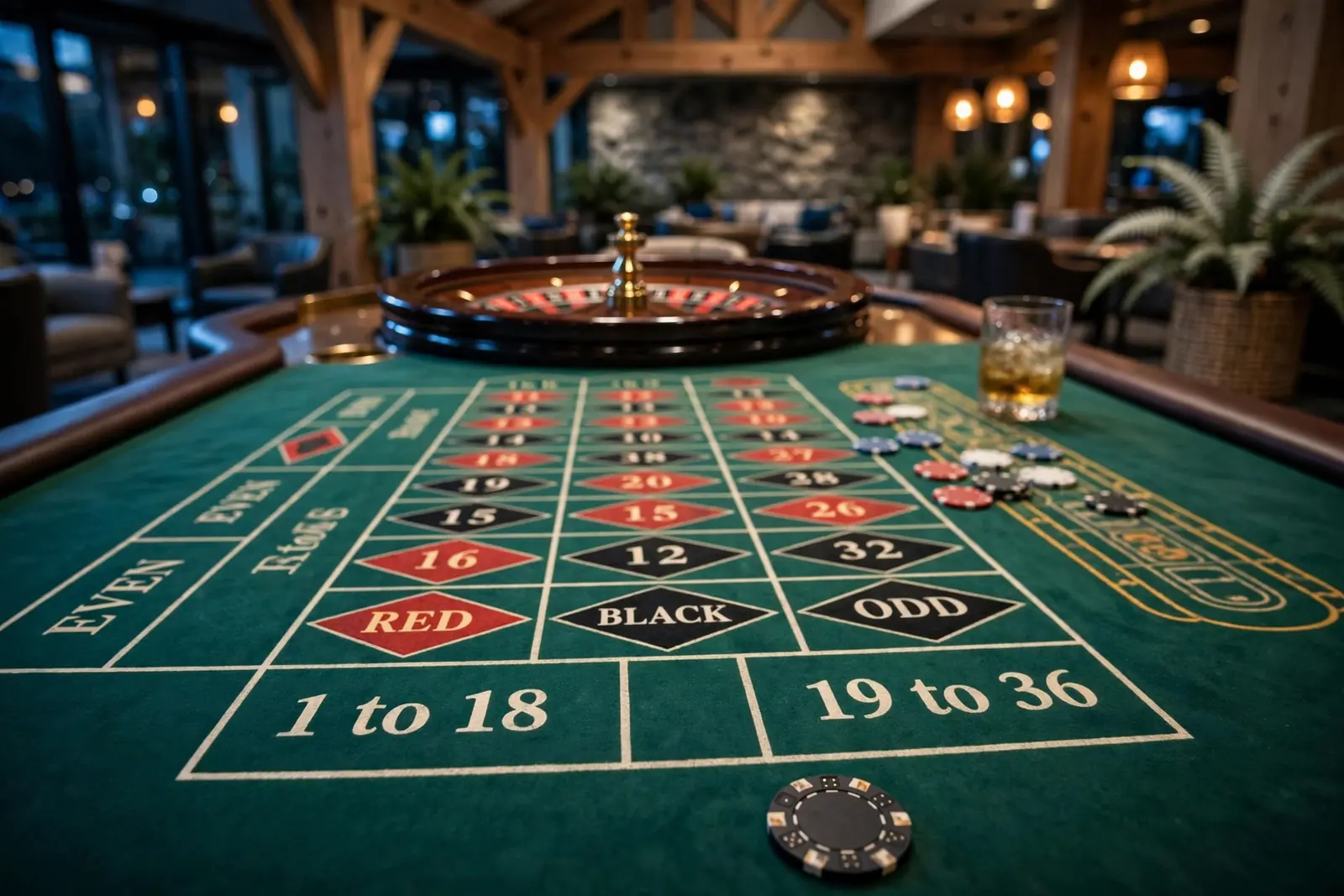
The logic behind doubling is straightforward: after a loss, stake more so that a later win can cover earlier losses and leave a gain. But that outcome depends on winning before the required stake becomes unaffordable or unavailable. Each loss adds to the amount already spent, and the next proposed stake grows sharply. A sequence intended to recover a modest loss can demand a much larger commitment after repeated losses.
This is a problem of exposure, not merely of choosing the right starting stake. Suppose you set aside money for play. A progression can use that money faster than flat stakes because each loss increases the next one. Once you cannot or do not want to place the required stake, the recovery plan stops. The losses already incurred remain; the intended later win has not occurred. Increasing the next stake does not undo that result.
The same limitation applies if you set a personal maximum stake. Such a boundary may prevent you from committing more than planned, but it also means a doubling sequence cannot continue indefinitely. The progression has to stop at that boundary, even if losses have not been recovered. Removing the boundary does not solve the problem: it only allows more money to be exposed before you decide to stop or run out.
A larger stake can make a win feel significant because the payout is tied to the amount wagered. It also makes a loss larger. That symmetry is easy to overlook when the progression is described only in terms of the target win. To assess it properly, track the total amount committed across the whole sequence, not just the next stake or the amount you hope to win. The cost of reaching a later bet includes every earlier loss.
- Track the total amount committed across the whole sequence
- Set a personal maximum stake
- Use a doubling progression to recover losses
- Assume a run of wins changes the odds of the next spin
There is also no reliable signal in a run of spins that tells you a win is due. A sequence of losses does not improve the next spin’s chances, and a previous win does not guarantee another. The roulette outcome is not adjusted to compensate for your betting history. Changing the stake changes the financial consequence of the next result, not the result itself.
The wheel’s rules matter to the cost of repeated betting, but a stake progression cannot remove that cost. On American Roulette, the house edge is 5.26%. Raising stakes after losses does not reduce that edge; it exposes more money to the same underlying game. The progression may produce a short-term recovery if a win arrives in time, but it cannot turn that possibility into dependable income.
If your aim is to win big, doubling may increase the size of a possible payout, but it also increases the amount at risk. If your aim is to recover losses, the strategy makes recovery conditional on a future win occurring before your available funds or chosen stopping point is reached. Neither aim is secured by the progression itself. A stake plan can organise how much you risk; it cannot control the wheel or guarantee that losses will be recovered.
Use Free Roulette to Learn Before Staking Money
A free roulette game lets you get familiar with the pace and sequence of a round without putting your own money at stake. It can help you understand what appears on screen, where to make a selection and when betting closes, if those controls are part of the game you are using. You can focus on following the process rather than deciding how much to risk.

Treat practice as a way to learn the interface, not as evidence that you have found a reliable way to win. In a free game, any balance shown is for play only. It does not represent money you can withdraw, and a result in that mode does not create a real-money return. Online roulette is available both for free and for real money, but the presence of the same game format does not make the two forms of play equivalent.
Use a free session to check whether you understand the information presented before a round begins and how to confirm or change a selection. Notice what happens after the result appears and how the game moves into the next round. If you are unsure what a control does, pause and work it out without a financial stake. This is more useful than clicking through quickly and assuming you have learned the sequence.
Free play can also help you see how your attention changes over repeated rounds. You may find it easier to keep track of decisions when no money is involved. That observation is about your own familiarity and behaviour; it does not show that future outcomes can be predicted. A practice result gives you no basis for expecting a particular outcome when you later play for real money.
The main limit is that practice cannot reproduce the financial consequence of staking money. A selection made with a play balance may feel different from the same selection when your own funds are involved. Free play therefore helps with basic familiarity, but it cannot tell you how you will respond to a real-money result or establish that staking is suitable for you.
Using free roulette is an excellent way to learn the interface and practice following a round’s sequence without any financial risk.
Before changing from play money to real money, make the distinction explicit: you are no longer simply rehearsing the interface. A real-money game involves funds you can lose, while free play does not put those funds at risk. If your aim is to learn the game, there is no need to treat free rounds as a test that must lead to paid play. You can use them for familiarity and stop there.
Even-Money Bets: Red or Black, Odd or Even
An even-money roulette bet covers a broad group of outcomes rather than naming one number. You choose a side of the layout, and the result is settled by whether the ball lands within that category. Red or black and odd or even are the familiar examples. These are called even-money bets because a winning selection returns an amount equal to the stake, in addition to returning the stake itself.
The categories are not interchangeable. A red bet is decided by the pocket’s colour; an odd bet is decided by its number’s parity. A result can therefore satisfy both selections, one of them, or neither. The same distinction applies to black and even. The table layout keeps these choices separate, so you can see which category a chip is assigned to before the spin.
High and low are also outside bets. They divide the numbered outcomes into lower and higher ranges, while columns and dozens group numbers by their position on the layout. Each choice asks a different question of the result: colour, parity, range, column or group of twelve. A column or dozen covers a more specific set of numbers than red or black, odd or even, high or low.
Choosing an individual number is a different type of selection. Instead of covering a category, you place the bet on one specific pocket. That makes the decision narrower: the bet is settled by whether that exact number appears. Outside bets spread the selection across a category, but the category still has to match the result for the bet to win.
On a live roulette table, the same distinction is useful when reading the betting layout. Identify the marked areas for outside bets, then place the chip on the relevant section rather than on an individual number. Red and black, odd and even, high and low, columns and dozens are all category bets; a number bet points to one pocket. The interface may present these choices on a digital layout, but the meaning of the selection remains tied to the area you choose.
Before confirming a bet, check what the selected area represents. A chip placed on a colour is not an individual-number bet, and a chip placed on a column is not a high-or-low selection. The category determines how the result is assessed. This makes outside bets easier to distinguish from single-number choices without treating them as the same kind of wager.
Free Roulette and the Difference Between Play and Wagering
A free roulette game does not involve a real-money stake. You can select a bet and watch the wheel resolve it, but no money is put at risk on that spin. In that sense, free play is not wagering: the result changes only the game’s simulated balance or display, not your money.
Uses play credits rather than withdrawable money to practice the game interface.
Involves a cash balance where winnings are added and stakes are deducted.
Real-money play has a different consequence. You stake money on an outcome, and the result determines whether that stake is lost or a payout is made. The wheel and the visible betting layout may look much the same in both modes, but the financial effect is what separates them.
A free game may show a balance or let you place bets using on-screen credits. Those credits are part of the simulation; they are not money you have deposited, won, or can withdraw. A changing balance in a free game therefore does not mean that a real transaction has taken place. It records the game’s simulated results.
The distinction matters even when the interface uses familiar roulette terms and displays outcomes in the same way. A chip shown on the table can represent a simulated selection or a real stake, depending on the mode. Before placing a bet, check whether the game is explicitly marked as free or real-money play. Do not infer the mode from the wheel’s appearance alone.
So, free roulette means playing without staking real money, while a real-money game involves a financial stake. Online roulette is available in both forms. The word “free” describes the absence of a real-money wager; it does not turn simulated results into winnings or make a real-money bet harmless. If money is being committed to a spin, it is not free play, regardless of whether the game otherwise looks identical.
What to Check Before Using a Roulette App
An app’s appearance does not establish that its casino is licensed or that its safeguards are in place. Before using an app for real-money roulette, check whether the service is operating under the New Zealand licensing framework that applies at the time. Treat the app and the gambling service behind it as connected but distinct: downloading an interface does not, by itself, confirm the status of the operator.
Age and identity checks are part of access to licensed play. You must be at least 18, and the operator must verify both your age and identity through its KYC process. Be prepared to provide information or documents for those checks before you can play. If the service does not explain how verification works, or presents access as available without confirming your identity, do not assume that it meets the requirements for licensed play.
Check the player-protection controls in the account settings before staking money. Licensed operators are required to make harm-minimisation tools available as standard. These include deposit limits, time-outs and self-exclusion. A deposit limit can restrict how much you put into the account; a time-out pauses your access for a period you choose; self-exclusion is a more substantial way to block your own access. Look for clear instructions on setting and changing controls, and make sure you understand what each one does before relying on it.
The route for resolving a problem also matters. Before domestic oversight was established, a New Zealand customer dealing with an offshore casino had no local government body to approach if a withdrawal was held or a chosen limit was disregarded. Licensed online casino play changes the regulatory setting, but you should still know how to raise a complaint with the operator and what local oversight applies to that service.
App Safety Checks
- Verify the operator’s licensing status
- Confirm age and identity verification (KYC) processes
- Locate player-protection tools like deposit limits
- Identify the formal complaint route
Do not use a “best” label, app-store listing or polished interface as a substitute for these checks. Focus on verifiable licensing status, the age and identity process, accessible protection tools and a clear complaint route. If those details cannot be established, the app alone gives you no sound basis for treating the service as licensed or protected.
Can One Roulette Bet Double Your Money?
A roulette bet can produce a return equal to twice the stake, but only when the selected outcome wins and the bet’s payout is equal to the amount wagered. The returned total then consists of your original stake plus an equal amount in winnings. If the bet loses, the stake is lost instead. So a possible double return is not the same as a dependable way to double your money.
The calculation depends on the payout attached to the bet, not merely on how much you stake. Different roulette bets pay at different rates because they cover different outcomes. A bet with a higher payout does not become more likely to win simply because its potential return is larger. Nor does increasing the stake change which outcomes the wheel can produce.
The zero matters. In French and European Roulette, the wheel has 37 pockets, numbered from 0 to 36. The zero is a losing result for many bets that otherwise appear to divide the wheel into two sides. That means a bet that could return twice its stake on a win can still lose when the ball lands on zero. In these games, the house edge is 2.70%; a single result can differ from the expected pattern, but the edge is part of the game’s structure.
When you assess whether a roulette bet doubles your money, distinguish the amount returned from the amount gained. A total return that includes your original stake is not all profit. If the bet wins, subtract the stake from the total return to identify the net gain; if it loses, there is no return from that wager.
The practical answer is conditional: one winning bet may double the amount staked when its payout matches the stake, but no single roulette bet guarantees that result. The wheel determines whether the outcome wins, while the payout rules determine what a win returns. Treat the possible payout as conditional arithmetic, not as a promised outcome.
French, European and American Roulette: How the Rules Change the Edge
The wheel and the rules attached to it determine the house edge. French and European roulette use a wheel with 37 numbered pockets, from 0 to 36. Both have a stated house edge of 2.70%, but French Roulette can reduce that edge further through the en prison and la partage rules.
These French rules matter when a qualifying even-money bet is affected by zero. With la partage, part of the stake is returned rather than lost. With en prison, the stake is held for a later spin instead of being settled as an immediate loss. The precise effect depends on the rule applied, but both reduce the cost associated with zero on eligible bets. They do not change the wheel’s pockets or make every type of wager benefit.
European Roulette does not include those French rules in the comparison here. Its stated edge remains 2.70%. So, when you compare European and French roulette, the key distinction is not the pocket count: it is whether the table applies en prison or la partage to an eligible wager.
American Roulette has a higher stated house edge of 5.26%. That difference means the rules produce a less favourable long-run mathematical position for the player than in the French and European games described above. The edge is a property of the game’s rules, not a prediction of what will happen on a particular spin. A result can still be a win or loss; the edge describes how the game behaves across repeated play.
When choosing a version for real-money roulette, check the table rules rather than relying on the variant’s name alone. In particular, look for whether en prison or la partage applies and which bets qualify. Those details affect how a zero is settled. A lower house edge reduces the game’s built-in disadvantage, but it does not remove it or make an individual outcome predictable.
Created by the ”Casino Bonus Guide NZ” editorial team.