
Lightning Roulette in New Zealand: Rules and Play
 Available in US
See how roulette bets, Lightning multipliers and wheel variants shape outcomes, and what strategies and statistics can—and cannot—tell you.

Table of Contents
- How Lightning Roulette’s Numbers and Rules Work
- What Changes When You Play Lightning Roulette Live Online
- First Person Lightning Roulette: How the View Changes
- What a Roulette Strategy Can—and Cannot—Change
- How to Play and What “Winning” Actually Means
- Trying Lightning Roulette Without Staking Money
- Lightning Roulette Bonuses, Tracking and Prediction Claims
- How to Read Roulette Results and Statistics
- Using a Lightning Roulette Demo to Learn the Game
- Lightning Roulette Online in New Zealand: Rules and Market Context
How Lightning Roulette’s Numbers and Rules Work
Lightning Roulette combines a roulette round with a multiplier feature. To understand a bet, separate the two parts: the wheel determines which pocket wins, while the Lightning feature can change the return attached to certain winning numbers. The feature does not replace the basic relationship between a bet and the number or group of numbers it covers.
A roulette wheel has numbered pockets, including zero. The table layout arranges those numbers for placing bets; it is not a map of their physical positions on the wheel. A straight-up bet covers one number. Other bets cover groups, such as a row or a colour. Outside bets cover broader categories, including odd or even numbers. Zero is treated separately from those even-money categories, so a bet on red, for instance, does not cover zero.
The wheel variant matters because the number of pockets affects the chance of any particular result. European Roulette has 37 pockets, with a single zero, and a house edge of 2.70%. American Roulette has 38 pockets, with both a single zero and a double zero, and a house edge of 5.26%. Those figures describe the standard variants; they should not be applied automatically to Lightning Roulette. Check the specific game’s displayed rules to see which wheel layout and betting conditions it uses.
Choosing a lightning roulette site in New Zealand means finding an option that suits how you want to play and what details matter to you. Use these verdicts as a concise reference, based only on the information available for each operator.
License: Tobique Gaming Commission, licence no. 0000064 Neospin lists a licence from the Tobique Gaming Commission, number 0000064. Check whether that licensing detail fits what you are looking for.
License: Tobique Gaming Commission, licence no. 0000091 7Bit Casino lists a Tobique Gaming Commission licence, number 0000091. This gives you a specific licensing detail to consider.
License: Malta Gaming Authority, licence no. MGA/B2C/370/2017 Play Grand lists a Malta Gaming Authority licence, number MGA/B2C/370/2017. You can use this detail when assessing the operator.
License: Tobique Gaming Commission, licence no. 0000002 Ricky Casino lists a Tobique Gaming Commission licence, number 0000002. Its licence information is the available point of reference here.
License: 07017519840 · Payout speed: 1-3 business days Zotabet lists the identifier 07017519840 and a payout speed of 1–3 business days. The stated payout timeframe may be useful if withdrawal timing matters to you.
License: Malta Gaming Authority, licence no. MGA/B2C/394/2017 N1 Casino lists a Malta Gaming Authority licence, number MGA/B2C/394/2017. This provides a concrete licensing detail for your consideration.
Payout speed: 1-3 business days Lamabet lists a payout speed of 1–3 business days. Consider this stated timeframe if you want to factor withdrawal speed into your choice.
Payout speed: 1-3 business days Wintino lists a payout speed of 1–3 business days. This is the available specific detail to consider when looking at the operator.
License: Curaçao Gaming Authority, licence no. OGL/2024/165/0185 BitStarz lists a Curaçao Gaming Authority licence, number OGL/2024/165/0185. You can take this licensing information into account when reviewing the operator.
Lightning multipliers are an added feature, not another kind of roulette bet. The game designates selected numbers for a multiplier. If a designated number is the winning pocket, the multiplier affects the return on an eligible winning bet that covers it, according to the game’s rules. It does not make that number more likely to land, and it does not turn a losing bet into a win. A bet covering a different winning number is settled under the ordinary rules for that bet, rather than receiving a multiplier simply because the round included Lightning numbers.
This distinction is important when comparing the game with standard roulette. In an ordinary round, the bet type and wheel result determine the settlement. In Lightning Roulette, that underlying process remains the basis of the round, with the multiplier feature adding a conditional change to some winning returns. The multiplier is not a prediction, and a number’s selection for the feature is not evidence that the wheel is more likely to stop there.
You can place bets on individual numbers or on groups, subject to the options and limits shown in the game. Covering every number may be possible on a standard roulette layout, but it does not remove the wheel’s zero pocket or guarantee a profit. In Lightning Roulette, whether every pocket can be covered within the game’s betting rules depends on the available interface and conditions. Even if all pockets are covered, the result and settlement still depend on the rules for that specific game.

If you are deciding what number to play, no number can be identified as more likely from the previous result or from a Lightning multiplier. Each spin is a new outcome; the feature changes potential returns on qualifying wins, not the probability that a selected pocket will win. A practical tip is to check the wheel layout, eligible bets and multiplier conditions before staking money, then keep your stake within what you can afford to lose.
The word “rules” can refer to two different things here: the standard roulette rules governing pockets and bets, and the game-specific rules governing its Lightning feature. Do not assume that rules from another variant carry across. For example, a European wheel’s single-zero edge describes European Roulette, not necessarily every game that uses a roulette-style table. Read the paytable and game information for the version you are using; those determine how its bets are accepted and how a multiplier is applied.
What Changes When You Play Lightning Roulette Live Online
In a live casino, the game is shown as a real-time video presentation rather than as a purely computer-generated animation. You see the roulette table and the person operating the wheel on screen, while the betting controls and information remain part of the online interface. Lightning Roulette brings its named feature into that live presentation; it does not turn the screen into a different kind of physical roulette wheel.
The live presentation is a digital feed viewed through a device. The video provides a view of the table, but the interface is required for selecting betting positions and managing stakes.
That distinction helps separate what you are watching from what you are doing. The video gives you a view of the table and the round as it unfolds. The interface is where you select betting positions and submit or manage your stake. The display may place controls beside or over the video, so you move between observing the table and reading the betting area without being physically present at either.
A live dealer adds a visible human presence that a standard animated roulette game does not provide. The dealer conducts the round in view of the camera, and the streamed presentation gives the result a physical context: a wheel, a ball and a table rather than only a graphic sequence. This can make the game feel closer to watching a casino table, but the video is still a digital feed viewed through a device. It is not the same as sitting at the table, and the interface remains necessary for placing bets.
The live format also changes how you experience timing. You follow the presentation as the round progresses, rather than treating each result as a button-triggered animation that appears immediately on your screen. There is a difference between seeing an event in the stream and interacting with the betting controls; the game communicates when the betting stage is open or closed through its interface. Pay attention to those on-screen state changes, because the video itself is not a substitute for the controls or their status.

Lightning Roulette adds a feature layer to this presentation. The title signals that the game includes a Lightning element, while the live feed shows the roulette round around it. The exact interface may present game information in panels or on-screen prompts, so read those rather than assuming that every live roulette table handles its display in the same way. A multiplier figure shown during a round is part of the game’s feature presentation; it should not be read as a promise about what a particular bet will return.
This is one reason a live Lightning Roulette table can look busier than standard roulette. Alongside the wheel and betting layout, the screen may need to communicate feature information and the current stage of the round. That extra visual layer can make the game more engaging to watch, but it also gives you more information to interpret. Keep your attention on the betting interface when making a selection, and do not confuse an animated highlight or a dramatic moment in the stream with a change to the rules of roulette.
The online format makes the table accessible through a connected device, but it does not remove the separation between the live presentation and the game’s underlying outcome. A camera view shows what is happening at the table; it does not let you influence the wheel. Likewise, the presence of a dealer does not make a result more predictable. Each round remains an uncertain event, and a real-money bet can lose.
Compared with standard roulette, then, the live version chiefly changes the presentation and the way you follow a round: a streamed table, a visible dealer, interface controls and Lightning-specific information share the screen. The betting experience still depends on reading the available controls and placing a bet before betting closes. If the extra motion or feature display makes it harder to track those steps, pause and inspect the interface before continuing.
- Check the wheel layout and multiplier conditions before staking
- Keep your stake within what you can afford to lose
- Use the interface to confirm betting stages
- Assume a multiplier makes a number more likely to land
- Confuse an animated highlight with a change in rules
- Use a video stream as a substitute for betting controls
First Person Lightning Roulette: How the View Changes
First Person Lightning Roulette changes the viewpoint from which you see the game. Rather than looking at a table from a more distant, studio-style camera angle, the presentation is designed to make the table appear closer to the player’s position. The result is a different visual relationship with the layout: the wheel and betting area can feel more immediate, while the view is less like watching a broadcast from outside the table.
That change is about presentation, not proof of different roulette rules. The name alone does not establish how a particular version handles its wheel, bets, multipliers, interface or round sequence. Those details should be read from the game information and on-screen instructions for the version you are viewing. Do not assume that a first-person perspective means you control the camera, see every part of a physical table, or interact with the game in a particular way.
The distinction from standard live roulette is useful. A live game commonly presents a studio or table through a camera, with the host and the wider setting forming part of what you see. A first-person format instead makes the player-facing table view the visual centre. It can reduce the sense of watching from the sidelines, but it does not necessarily reproduce the full experience of sitting at a physical table. The screen remains a designed view, and its framing determines what is visible at any moment.
This perspective can affect how easily you orient yourself. A closer view may make the relationship between the wheel and betting layout easier to follow, especially if you are unfamiliar with where to look during a round. It may also draw attention to the interface rather than the studio environment. These are viewing effects, not changes to the underlying chance of an outcome. A different angle cannot make a result more predictable.

Treat First Person Lightning Roulette as a format to inspect rather than as a promise about specific mechanics. Before taking part, check which controls are available, how the game indicates the current stage of a round, and where its rules and paytable can be opened. If a particular feature is not shown or explained there, the first-person label is not enough to confirm that it exists. The same caution applies when a site uses similar wording: the product name does not by itself verify that the offered game is identical.
The camera perspective also cannot reveal a pattern in the wheel. Roulette spins are independent, so earlier results do not change the probabilities for a later spin. A closer image, more immersive framing or visible sequence of outcomes does not give the viewer a predictive advantage. It changes what the game looks and feels like on screen, not what a future result depends on.
Searches for a first-person version may appear alongside questions about demos, payment methods, access restrictions or return percentages. Those are separate matters. A first-person display does not, by itself, establish whether a demo is available, which payment methods a site accepts, whether a particular restriction applies, or what return figure belongs to the game. Check the specific game and site information for those points rather than inferring them from the camera style.
When comparing the formats, focus on what you can actually observe: the angle, the amount of the table shown, the clarity of the interface and the instructions available before play. That gives you a concrete basis for deciding whether the presentation suits you, without confusing a visual redesign with a change to roulette itself.
Strategy Limits
- A strategy manages your choices and exposure, not the random outcome
- No betting pattern can remove the house edge or ensure profit
- Previous results do not influence the probability of the next spin
- Always set a budget and avoid increasing stakes to recover losses
What a Roulette Strategy Can—and Cannot—Change
A roulette strategy is a way of choosing which bets to place and how much of your available play budget to expose to them. It can change the pattern and size of your possible wins and losses. It cannot make a number more likely to appear, alter the wheel’s probabilities or ensure a profitable result. That distinction matters in Lightning Roulette just as it does in other roulette formats: a betting plan controls your choices, not the random outcome.
Different bets distribute risk differently. A bet on one number depends on a narrower outcome than a bet covering a group of numbers, while an even-money outside bet covers a broader set of outcomes. That broader coverage does not make the bet a way to defeat the game; it changes how often a bet may be settled as a win or loss and how much it can pay. The wheel’s rules determine the underlying probabilities.
A useful strategy therefore begins with a limit on exposure, not a prediction. Decide what you can afford to lose before playing, and do not increase your stakes to recover losses. A sequence of wins does not establish that another win is due, and a run of losses does not make a particular result more likely. If you continue placing bets, each spin remains a separate event.

This is why systems that raise or lower stakes in response to recent results cannot control what happens next. They can change how quickly your balance is exposed to losses, especially if a losing run continues, but they do not change the chance of the next outcome. Nor does spreading bets across the layout make the wheel favour a particular result. The total amount at risk may increase while the underlying probabilities stay the same.
The same limit applies to attempts to “beat” Lightning Roulette through a special betting pattern. A strategy may help you keep track of your stakes or choose a style of risk you are comfortable with. It cannot remove the house edge or turn random results into a dependable income. Even a rule that improves the terms of a particular roulette variant does not make outcomes predictable. For instance, French Roulette’s La Partage or En Prison rules reduce the house edge to 1.35% when they apply, but spins remain independent.
Previous results are records of what has already happened, not signals that determine what comes next. A number that has not appeared recently is not “overdue”; one that has appeared repeatedly is not guaranteed to stop. Looking at past outcomes can describe a session, but it cannot supply a reliable forecast for the next spin. The same reasoning applies to patterns marked on a screen or noted by a player.
If you use a strategy, judge it by what it can genuinely manage: your stake choices and your exposure to loss. Do not treat it as a prediction tool or as protection from variance. Every real-money bet can lose, and you should never risk more than you can afford to lose.
Before You Bet
- Confirm the selected position on the betting layout
- Verify the stake amount
- Check any feature-specific terms or multiplier conditions
- Ensure you understand the payout rules for your bet type
How to Play and What “Winning” Actually Means
To play Lightning Roulette, select a stake and place it on one or more positions on the betting layout before betting closes. Each position represents an outcome or group of outcomes. When the wheel result is settled, the game compares it with your selections: a matching bet may receive a payout, while a losing bet is collected. The exact return depends on the bet type and the game’s stated payout rules.
A winning spin does not necessarily mean you have made a profit overall. It means that at least one bet has produced a return. If your other bets lose, or if the return is smaller than your total stake, your balance can still fall. A payout is not the same as net profit: assess it against the amount you risked, not just the amount displayed as a return.
Lightning Roulette adds a feature to the roulette result, but it does not make every selection a winner. Any multiplier or enhanced payout applies only under the game’s stated conditions. Read the on-screen rules before staking money so you know which bet types qualify and how a boosted return is calculated. Do not assume that a special feature changes the result of every bet or protects the stake on a losing outcome.
There is no method for cheating Lightning Roulette that can reliably control a legitimate spin. Claims about software, timing, patterns or a hidden sequence do not change the wheel’s random outcome. Roulette spins are independent: a previous result does not make a particular number or colour more likely on the next spin. A run of similar outcomes can occur, but it is not evidence that the next result is due to change.
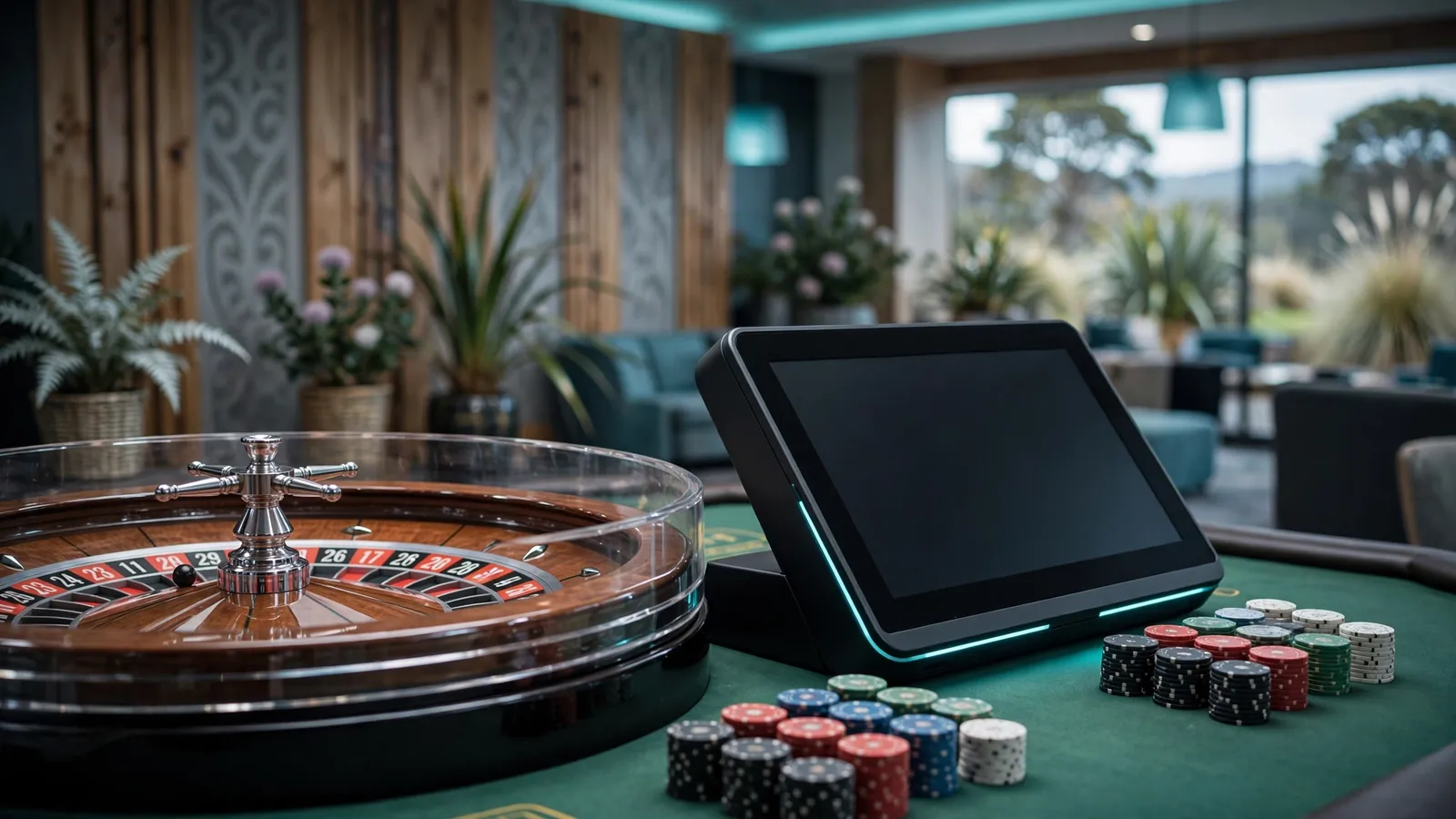
You can choose how to divide your stake, but no betting choice guarantees a win. A bet covering more possible outcomes may have a different payout from a bet on a single number; it also changes how much you stand to receive if it wins. Neither choice removes the risk that the selected outcome will not occur. Treat each real-money bet as money you could lose, and do not stake more than you can afford to lose.
Before confirming a bet, check the selected position, stake and any feature-specific terms shown by the game. After the result, compare the settled return with your stake and the rest of your bets. This makes the meaning of “winning” concrete: the game has paid a return on a matched bet, but that does not promise a net gain across a session or on a later spin.
An app download, where an operator offers one, changes how you access the game, not the way roulette outcomes are determined. The same distinction applies whether you play through an app or a browser: the interface carries your selection to the game, while the result remains outside your control. Don’t install software advertised as a tool to predict or manipulate spins; it cannot turn a random outcome into a guaranteed payout.
Trying Lightning Roulette Without Staking Money
A free-play option lets you open Lightning Roulette without placing a real-money bet. Depending on how the game is offered, you may be able to use a play-for-fun mode or a balance that has no cash value. The point is to see how the game interface behaves without putting your own funds at risk—not to generate withdrawable winnings.
Attention Virtual balances and winnings shown in a no-stake or free-play session cannot be treated as cash winnings.
Availability depends on the site and the version it provides. If a game page offers a free mode, check that it is clearly identified as no-stake play before starting. If no such option appears, do not assume that a promotional offer or a displayed balance is equivalent to free play. The terms may treat promotional credits differently.
In a no-stake session, you can inspect the controls, locate the betting areas and follow how a round is presented. You can also see how the game displays an outcome and any associated payout information. That can make the interface less unfamiliar before you decide whether to play with money. It does not establish how often a particular outcome will occur, or what you would receive from a real-money bet.
A displayed payout in free play is illustrative of the game’s payout rules, not money owed to you. Virtual balances and any gains shown in a no-stake session cannot be treated as cash winnings. The session also does not prove that a future real-money round will produce the same outcome: roulette spins are independent, and a free-play result has no predictive effect on the next spin.
Keep free play separate from bonuses that require a deposit or attach conditions to promotional funds. A bonus is not necessarily a no-stake mode. Bonus money must be wagered 50X within 30 days, while winnings from free spins must be wagered 50X within 7 days. A withdrawal request voids all active or pending bonuses. Read the applicable terms before accepting promotional funds, since eligibility, game contribution, expiry and withdrawal conditions can also apply.
Free play is therefore useful for orientation, but limited as a substitute for real-money play. It cannot show how you will respond to losing money, and it does not make a real bet safer or improve its odds. If you move from a no-stake session to wagering, set a budget beforehand and do not risk more than you can afford to lose. A session that costs nothing may help you understand the interface; it cannot remove the financial risk of a later bet.
Lightning Roulette Bonuses, Tracking and Prediction Claims
A Lightning Roulette bonus changes the terms attached to a promotion, not the odds of a spin. Before accepting one, check who is eligible, which games count, when the offer expires, what wagering is required and what restrictions apply to withdrawals. A headline bonus can be difficult to use if roulette contributes little or nothing toward its wagering requirement, or if the offer excludes the game.
Bonus money must be wagered 50X within 30 days. Winnings from free spins must be wagered 50 times within 7 days. These are separate conditions: check which one applies to the offer you accept, and whether the operator defines eligible games or contribution rates that affect progress. A withdrawal request voids all active or pending bonuses. That means requesting a payout before meeting the terms can forfeit the remaining promotional balance or associated benefit. Read the full conditions before opting in, rather than relying on a short banner description.
If a promotion is connected to a Bitcoin deposit, the payment method does not improve the roulette odds or change how spins work. Check the bonus conditions and withdrawal rules independently of the currency or payment route. Do not deposit money solely to unlock an offer unless you understand the requirements and can afford to lose the deposit.
Bonus Wagering Requirements
Bonus money must be wagered 50X within 30 days. Winnings from free spins must be wagered 50X within 7 days. A withdrawal request voids all active or pending bonuses.
Lightning Roulette tracking can record previous results, but a record is descriptive, not predictive. Roulette spins are independent: the result of an earlier spin does not change the probabilities on the next one. A sequence that appears to favour certain numbers, colours or ranges therefore provides no reliable basis for claiming those outcomes are now more or less likely. A tracker can help you review what has happened; it cannot reveal what must happen next.
The same limit applies to a lightning roulette predictor. A system may display patterns, generate suggested bets or assign scores to outcomes, but those outputs do not control the wheel or make a future result certain. Even a prediction that has matched past results cannot establish that it will keep matching future spins. Changing your stake in response to a streak also does not alter the probability of the spin.
Treat tracking tools as record-keeping and bonuses as conditional promotions, not as ways to remove uncertainty. Keep any notes separate from predictions, and do not use a pattern or bonus requirement as a reason to stake more. Every real-money bet can lose; do not risk more than you can afford to lose.
How to Read Roulette Results and Statistics
A roulette result is the outcome of one spin. A results history records outcomes that have already occurred; statistics summarise those records or describe a game’s stated return model. Neither tells you what the next spin will produce.
A payout percentage is a long-run theoretical measure of how much of the total amount wagered a game returns to players, rather than a forecast for an individual session. A house-edge figure describes the corresponding expected advantage held by the casino under the stated rules. These measures are related, but they are useful only when you know which roulette variant, rules and source the figures refer to.
A specialist review reports payout percentages of 94.70% for American Roulette and 97.30% for European Roulette. Treat those as figures reported by that review, not as universal specifications for every table or game bearing those names. Roulette rules can differ, and a percentage without its rules and methodology is difficult to compare fairly with another figure.
The same caution applies to 100/1 roulette: a specialist review gives a payout-percentage range from 92.86% to 96.19%. The spread itself signals that the label alone does not establish a single return figure. Before using a statistic to compare games, identify the exact variant and the assumptions behind the calculation. A figure for another roulette variant is not automatically a statistic for Lightning Roulette.
In particular, a Lightning Roulette results display may show recent numbers or other recorded outcomes, but a sequence is not a prediction tool. Spins are independent: previous results do not alter the probability of outcomes on a future spin. A run of similar results may look meaningful when viewed in a history, but it does not make a different result “due” next.
This distinction also explains why statistics can describe a game without forecasting a session. A long-run return figure concerns repeated play under its stated model; it does not guarantee that your own results will approach that percentage over a short period. Individual outcomes can vary, and every real-money bet can lose. A roulette game is not a slot simply because someone calls it a “roulette slot”: use the actual game rules and variant when interpreting its published figures.
Does a results history predict the next spin?
No. A results history is a record of what has already occurred; it does not tell you what the next spin will produce.
What is a payout percentage?
A payout percentage is a long-run theoretical measure of how much of the total amount wagered a game returns to players, rather than a forecast for an individual session.
Can I use a predictor tool to win?
No. Even if a system matches past results, it cannot establish that it will keep matching future spins, as every spin is an independent event.
When you read Lightning Roulette statistics, separate three things: the recorded results, the game’s rules, and any attributed return estimate. Only the first describes what has already happened. None can reveal the next result.
Using a Lightning Roulette Demo to Learn the Game
A Lightning Roulette demo is best treated as a rehearsal of the interface, not a forecast of what will happen when money is involved. If a demo version is available, you can use it to locate the betting controls, read the on-screen prompts and follow the game from bet placement through the result. That familiarity can reduce confusion when you encounter the real-money version, but it does not make later outcomes more predictable.
Use the practice session to notice how the screen is organised. Find where your selected bets appear, how the interface shows the total stake, and where the result and any associated game information are displayed. The purpose is to understand what each control does before a mistaken click could place a real-money bet. If an instruction or label is unclear, pause and inspect it rather than assuming what it means.
A demo can also help you follow the order of events. Observe when the interface accepts or closes betting, how it indicates that a round is in progress, and when it presents the outcome. These are interface cues, not signals about which number will come next. A sequence that appears familiar in practice does not give you an advantage in a later round.
Treat the demo as a learning environment with limits. Its settings or presentation may not match every real-money session, and practice results cannot establish how often a particular outcome will occur. Roulette spins are independent: previous results do not change the probabilities of future ones. No amount of repetition in a demo can turn a random result into a dependable prediction.

Before moving from practice to staking money, make sure you can identify the bet you intend to place and understand what the interface is showing. If you cannot, continue learning without staking. If you do choose to play for money, remember that every bet can lose and do not risk more than you can afford to lose. A Lightning Roulette free demo can help you learn where to look and what happens on screen; it cannot protect a real-money stake or promise a particular result.
Lightning Roulette Online in New Zealand: Rules and Market Context
New Zealand’s online casino framework changed in 2026. The Online Casino Gambling Act 2026 took effect on 1 May, establishing the country’s first domestic licensing system for online casino providers. New Zealand still does not permit online casinos to be based domestically; the new regime concerns the licensing of services offered online.
The Department of Internal Affairs is the primary gambling regulator and oversees the online casino licensing framework. The Gambling Commission handles casino licence applications, decides whether to grant them, issues licences and approves changes to licence conditions.
A transition period runs from 1 May to 1 December 2026. During this interval, providers that were already serving New Zealand customers before the law took effect may continue operating under the transitional provisions. Providers that have not applied for a licence must stop offering online casino gambling in New Zealand by 1 December. The full licensing regime is expected to be operational in 2027, while unlicensed operation is expected to become an offence around mid-year. Operators without a licence may face enforcement and fines of up to NZ$5 million.
Advertising is also restricted during the transition: online casino gambling must not be advertised to people in New Zealand. This matters when encountering promotions for Lightning Roulette online; an available website or game is not, by itself, evidence that its operator holds a New Zealand licence.
Licensed operators must use stricter age and identity checks. These controls are part of the new regime, rather than a feature of the roulette game. Before the 2026 law, offshore online casino services were not licensed or supervised by a New Zealand regulator, and customers had no domestic government recourse when wagering with such a site.
How do Lightning Number multipliers work?
Selected numbers receive a multiplier, which changes the return on an eligible winning bet that covers the number if it lands. It does not make that number more likely to win or turn a losing bet into a winner.
What is Lightning Roulette?
Lightning Roulette is a roulette game that combines a roulette round with multipliers on selected numbers. In the live version, you watch the wheel and dealer through a video feed and place bets using the online interface.
Does Lightning Roulette use a real wheel?
Yes. In the live version, the video shows a physical roulette wheel, ball and table; you place bets through the online interface.
Which roulette version has the lowest standard house edge?
French Roulette offers the lowest edge for even-money outside bets when La Partage or En Prison applies: 1.35%. These rules apply only to those bets when zero lands.
Written by the editors at Casino Bonus Guide NZ.