
Casino Apps in New Zealand: Mobile Play Guide
 Available in US
A practical overview of mobile access, account checks, game limits and the rules governing offshore casino sites.

Table of Contents
- How New Zealand’s Online Casino Rules Change in 2026
- What a Casino App on Your Phone Actually Is
- Using Casino Sites on an iPhone or iPad
- Casino Apps on Android: Browser Access and Verification
- Mobile Casino Play: Screen Layout, Controls and Loading
- Installing a Casino App or Adding a Site Shortcut
- Live Casino Games and Table Bet Limits
- How to Interpret Casino App Ratings and Limits
- Real-Money Casino Play: Verification Before Withdrawal
- Real Cash, Bonus Turnover and Withdrawal Caps
How New Zealand’s Online Casino Rules Change in 2026
For much of the period before 2026, New Zealand had no domestic licensing system for online casinos based offshore. The Gambling Act 2003 did not allow online casinos to be based in New Zealand, and offshore operators were not brought under the country’s existing gambling regulatory regime. That left a gap: New Zealand residents could legally play at internationally licensed online casino sites, but those sites were not licensed or supervised by a New Zealand regulator. If a dispute arose with an offshore website, a customer had no domestic government recourse.
The Online Casino Gambling Act 2026 creates a domestic framework for online casino gambling and starts a staged change in how providers may serve the country. Its commencement date, the date when unlicensed gambling becomes explicitly prohibited, and the end of the transitional period are different points in that process. Treating them as one deadline can give you the wrong picture of which rules apply and when.
The key dates are not interchangeable
The Act came into force on 1 May 2026. That date starts the legal framework and the transitional window; it does not mean that the complete licensed market was operating on that day. Providers that were already offering services to people in New Zealand before the Act came into force may continue during the transition, subject to the Act’s transitional provisions.
Choosing a casino app means looking beyond the name to the details available about its operator. Use this list as a starting point to check which options have information relevant to what you want.
License: Tobique Gaming Commission, licence no. 0000064 Neospin is listed with a Tobique Gaming Commission licence, number 0000064. That gives you a specific licensing detail to consider when assessing the operator.
License: Tobique Gaming Commission, licence no. 0000091 7Bit Casino is listed with a Tobique Gaming Commission licence, number 0000091. You can use that licence information as one point of reference.
License: Malta Gaming Authority, licence no. MGA/B2C/370/2017 Play Grand is listed with a Malta Gaming Authority licence, number MGA/B2C/370/2017. This provides a specific regulatory credential for you to review.
License: Tobique Gaming Commission, licence no. 0000002 Ricky Casino is listed with a Tobique Gaming Commission licence, number 0000002. Its licence details are the available point of reference here.
License: 07017519840 · Payout speed: 1-3 business days Zotabet has a listed licence identifier, 07017519840, and a stated payout speed of 1–3 business days. These are the available details to consider when reviewing the operator.
License: Malta Gaming Authority, licence no. MGA/B2C/394/2017 N1 Casino is listed with a Malta Gaming Authority licence, number MGA/B2C/394/2017. You can take this specific licence information into account when considering the operator.
Payout speed: 1-3 business days Lamabet lists a payout speed of 1–3 business days. This is the available specific detail about the operator.
Payout speed: 1-3 business days Wintino lists a payout speed of 1–3 business days. This is the available specific detail for you to consider.
License: Curaçao Gaming Authority, licence no. OGL/2024/165/0185 BitStarz is listed with a Curaçao Gaming Authority licence, number OGL/2024/165/0185. This gives you a specific licensing detail to review.
From 1 July 2026, unlicensed online casino gambling is explicitly prohibited under New Zealand law. This is a distinct legal milestone, not the end date of the transition for every existing provider. The Act allows qualifying operators already serving New Zealand customers to keep operating through the transitional period, which runs until 1 December 2026.
From 1 December 2026, those transitional permissions end. Operators that have not secured the required position under the new regime must stop providing services to New Zealanders. The practical effect for you depends on whether a provider is covered by the transitional provisions and, as the licensing system develops, whether it is authorised to continue. Do not infer a provider’s New Zealand status solely from the fact that it has an offshore licence: that licence is not itself a New Zealand authorisation.
These dates describe the legal position of providers and the development of the market. They do not mean that a player is automatically committing an offence by accessing an offshore casino. New Zealand’s rules focus on the operators, and players do not face a fine or criminal prosecution simply for playing at an offshore casino.
A transition before the full market
The change is not an immediate switch from offshore access to a fully functioning domestic market. The Act establishes New Zealand’s first domestic licensing regime for online casino gaming, but the transition gives time for the new system to be put in place. Government implementation planning places the fully regulated market in 2027; the regime is not expected to be fully operational as soon as the Act starts.

That distinction matters when you assess claims about a new casino app or a site that says it is available to New Zealand customers. A downloadable app, a functioning account, or an offshore licence does not establish that its operator holds a New Zealand licence. During the transition, existing operators may be permitted to continue under transitional provisions, while the future licensed market is still being established. Check the operator’s New Zealand-specific authorisation status directly rather than treating general claims about international licensing as proof of local approval.
There is also a difference between legal access and domestic protection. Before the Act, New Zealand residents could use internationally licensed sites, but the New Zealand government did not supervise those offshore services. The new regime changes the regulatory structure for providers; it does not turn every offshore site into a locally licensed service on the commencement date. If you are considering a service during the transition, identify which legal basis it says allows it to serve New Zealand and whether that status applies to the relevant date.
Act Commencement Date 1 May 2026
Unlicensed Gambling Prohibition 1 July 2026
End of Transitional Period 1 December 2026
Full Regulated Market Expected 2027
For the wider market, this staged approach is channelisation: moving online casino activity into a system where providers can be authorised under New Zealand rules. The transition dates show why a single label such as “legal” or “licensed” may be insufficient without a date and a jurisdiction. On 1 May, the Act began and the transitional window opened. On 1 July, unlicensed gambling became explicitly prohibited. On 1 December, the permission for eligible pre-existing operators to continue through the transition ends. The full licensed market is expected to follow in 2027.
When you read a statement about a casino app’s status, check whether it refers to an offshore licence, transitional permission, or New Zealand authorisation under the new system. Those terms describe different things. The legal framework is changing on a timetable; an operator’s position should be assessed against the date you intend to use the service, not just against a general claim that it accepts New Zealand customers.
What a Casino App on Your Phone Actually Is
The phrase “casino app” can describe two different things: software installed on your phone, or a casino website opened in a mobile browser. They may lead to a similar-looking screen, but the phone handles them differently. Knowing which one you are using helps you understand what gets installed, where the service opens and what a home-screen icon does.
A native app is a program installed on the device. You open it from an app icon, and its interface is designed to run as an application rather than as a page inside a browser tab. The app may connect to the casino’s online service to show your account and games, so installing it does not mean that your account or play is stored only on the phone.
A casino site in a mobile browser is a web page. You enter or select its address, and the browser loads the site. The browser remains part of the experience: its page controls, tabs and address field belong to the browser, even if the casino page itself fills most of the screen. Closing the page is not the same as uninstalling software; it simply closes or leaves the web page.

For most offshore casinos, mobile access is through a browser rather than a dedicated phone app. This is why a page can look app-like without being an app installed from an app store. The distinction is about how the service is delivered, not just how its buttons and menus are arranged. A full-screen display or a familiar icon does not by itself prove that native software is installed.
What a home-screen shortcut does
You can save a casino website to your phone’s home screen. This creates an icon that points to the site, making it quicker to open than finding the address again. The icon is a shortcut: it does not turn the website into a native app or install the casino’s software.
When you tap the shortcut, the phone opens the saved web address. Depending on the device and browser, the site may open in a browser window or in a more app-like display. Either way, the underlying service is still the website, and browser behaviour can still matter. For instance, the page must load from the casino’s online service; the shortcut is not a separate copy of the games.
A home-screen shortcut is merely an access point and does not turn a website into a native app or install software on your device.
This also explains why removing the icon does not necessarily affect an account. The shortcut is an access point, not the account itself. If you use the casino through a browser, the account is associated with the service, while the icon merely helps you reach its site. Removing the shortcut removes that convenient entry, not the casino account.
How to tell what you opened
Look at how you reached the service. If you searched for or entered a web address in a browser and the page appeared among its tabs, you are using the website. If you downloaded a program through an app store and launch it from the device’s app list, you are using installed software. An icon saved to the home screen can resemble an app icon, so its appearance alone is not a reliable test.
Before installing anything presented as a casino app, check that it is genuinely offered by the operator and that its source is clear. A shortcut requires no app installation; it simply saves the site’s address. That difference is the basic distinction behind mobile casino access, regardless of whether the service is described as one of the best casino apps or as a browser-based option.
Using Casino Sites on an iPhone or iPad
On an iPhone or iPad, you can open a casino website in the device’s browser and use its mobile layout to reach games and account controls. The browser displays pages and game interfaces designed to adapt to the screen; it does not make every site equally usable. A page that looks complete on a computer may still require awkward zooming or scrolling on a phone.
When assessing an online casino on an Apple device, treat the game screen as a working interface, not just a picture. You need to see the game, understand what each control does and reach those controls without repeatedly resizing the page. The practical test is whether the layout remains clear during play, including when you hold the device in the position the game expects.
iPhone: fit and touch control
An iPhone gives a game less screen space than an iPad, so layout choices become more noticeable. A well-adapted pokie can run in portrait mode, keeping the game upright while leaving its main controls accessible with one thumb. That reduces the need to shift your grip or reach across the screen to make a routine selection.
Look at the relationship between the game and its controls. If the action buttons are small, crowded, or placed near the edge, a tap may be difficult to make accurately. If menus cover the game or important information disappears off-screen, the interface is not adapting cleanly. Being able to enlarge a page can help you read text, but constant zooming and panning are signs that the layout is not working well at the phone’s size.
The browser’s own navigation also takes up part of the viewing area. A usable page should make it clear which controls belong to the game and which belong to the casino website or browser. If opening a menu or changing a page leaves you unsure where you are, the interface is adding friction rather than helping you play.
- Check the operator’s specific New Zealand authorisation status
- Ensure game controls are reachable and text is legible
- Verify that the layout fits your device orientation
- Assume an offshore licence equals New Zealand authorisation
- Treat a home-screen icon as proof of installed software
- Rely on general claims about international licensing
iPad: more room, different checks
An iPad’s larger display can make text and controls easier to distinguish, but extra space alone does not guarantee a good experience. Check whether the page uses that space sensibly. A game stretched across a wide screen may leave controls far apart, while a narrow layout may leave an unused area around the game. Either can make touch interaction less direct.
Try the site in the orientation you intend to use. Some games are designed to remain in portrait view; others may rearrange when the device turns. The important point is consistency: the game should remain readable, and its controls should stay reachable after a change in orientation. Do not assume that a layout that works on an iPhone will feel identical on an iPad.
Text size matters on both devices. Rules, menus and account information should be legible without repeatedly enlarging the page. If the game itself is clear but the surrounding site controls are difficult to read, the overall mobile experience is still incomplete.
Check the whole session, not one screen
A useful assessment should include more than the first page you see. Move between the lobby, a game and its controls, then check whether the browser continues to display the site in a stable way. Notice whether pages respond to taps, whether content fits the screen and whether you can return to the game without losing track of its controls.
Connection quality affects what appears on screen. A mobile game suited to smaller displays should load quickly on an average connection, rather than leaving you waiting through repeated reloads. Loading time can vary with the connection and the page, so a single successful opening does not establish how the site will behave every time. If a game repeatedly stalls or fails to render properly, changing the device orientation will not solve an underlying loading problem.
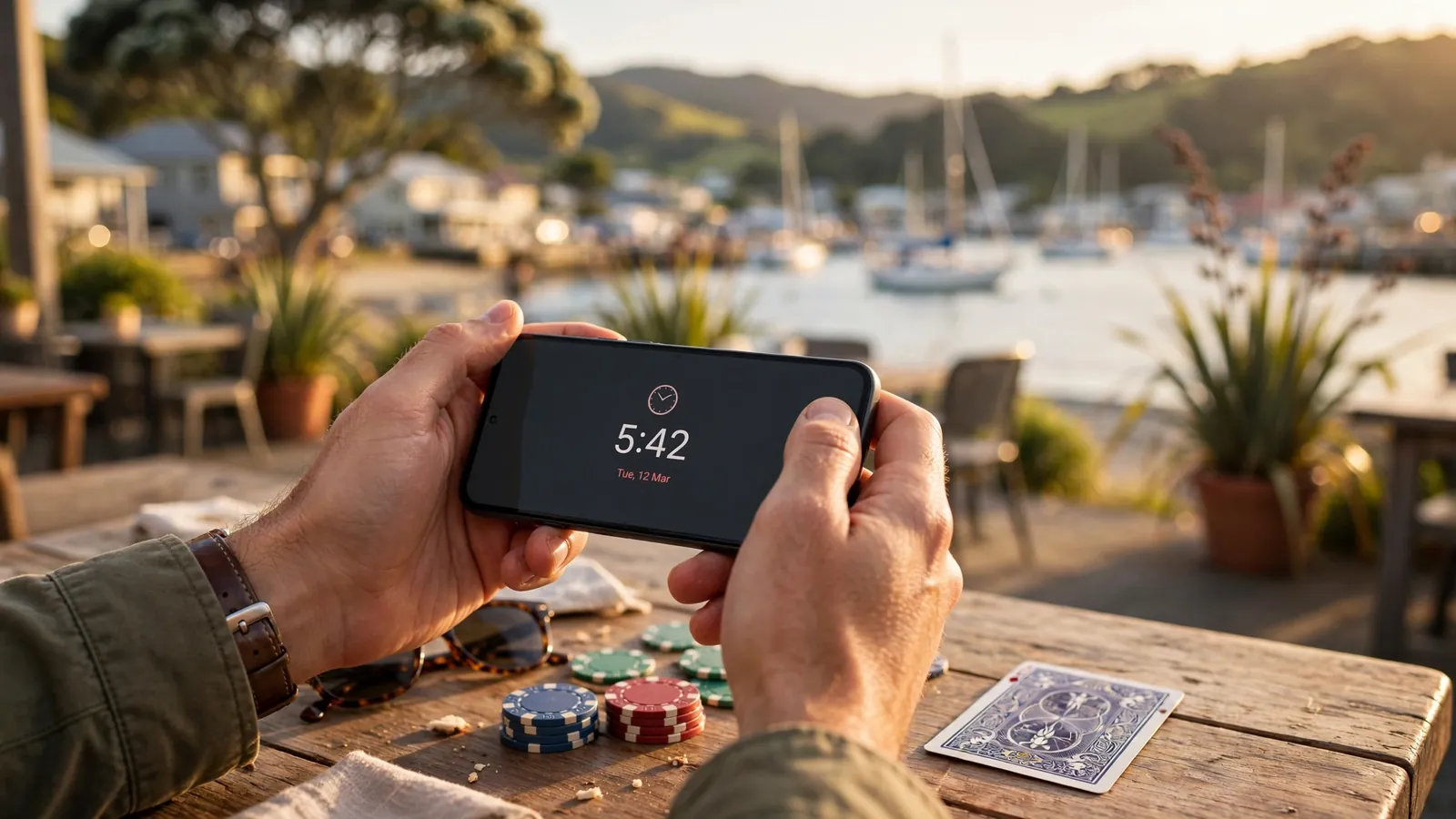
Payment support is another part of mobile suitability: a mobile casino game should support mobile payments. This does not mean that every payment option works in the same way on every device. Check the payment information presented by the site before relying on a particular method.
For a real-money casino session, browser access does not remove the need to consider how the site handles your account or what rules apply to its services. The screen can show you the controls, but it cannot make unclear terms easier to interpret. Keep the assessment focused on observable details: readable text, reachable controls, a layout that fits the device, payment support and reliable loading. These are more useful measures of an iPhone or iPad experience than the word “app” in a site’s description.
Casino Apps on Android: Browser Access and Verification
On Android, casino play is commonly delivered through a mobile browser rather than a dedicated app. Many offshore casinos do not provide a native app, so opening the operator’s site in your browser is often the practical route. The important distinction is that the phone’s operating system does not determine whether the casino has an app: that depends on what the operator provides.
A browser-based site loads its games and account pages when you visit it. You can sign in through the page, while the browser handles the display and interaction. If a casino advertises an Android app, check that the download is offered through a recognised app store or directly through the operator’s verified site. An unfamiliar download link can lead to software that is not the casino’s official product. Do not install a file simply because a page labels it an app.
Attention Only download apps from recognised app stores or the operator’s verified site to avoid unofficial software.
Account verification is a separate part of access. An operator may ask you to confirm your identity before it allows full use of the account. The exact point at which checks occur can differ: verification may be requested during registration or later, depending on the operator’s process. Keep your account details accurate and follow the instructions shown inside the official account area. If a check is pending, being able to open the site on Android does not mean every account function is available.
A specialist review of offshore casinos available to New Zealand players reports verification times of 24–48 hours at most sites it covers. Treat that as a reported range, not a fixed service standard: the operator’s review process and whether it needs further information can affect completion. If the site asks for documents, submit them through its stated secure channel rather than sending them to an address or link found elsewhere.
For Android users, the useful checks are therefore straightforward: confirm whether the operator offers a genuine app, use the official site if access is browser-based, and read the account’s verification instructions before relying on unrestricted access. These steps help separate a technical access issue from an account check; reinstalling a browser or app will not complete an identity review.
Mobile Casino Play: Screen Layout, Controls and Loading
A phone screen gives a game less room than a desktop display, so layout affects whether you can see the play area and use its controls without repeatedly zooming or changing orientation. Pokies designed for mobile use should fit a portrait screen: the reels remain visible, while the main controls stay within reach below or beside them. If key buttons overlap the game or sit near the edge, accidental taps become more likely.
Check the controls, not just the artwork
A compact layout is useful only if its controls remain clear. Look for a spin button that is easy to distinguish from the bet controls, with labels and balances that do not disappear behind decorative elements. One-thumb access matters because you may hold the phone in one hand while operating the game with the other—or use the same hand for both. Controls should be reachable without covering the screen with your thumb.
The same test applies to menus and settings. If adjusting a stake or opening a game menu requires several precise taps, the interface may be awkward on a small display even if it looks polished in a screenshot. Treat readability and reach as separate checks: text can be large enough to read while a button is still difficult to tap.
Loading and payment support
Loading speed affects more than the first screen. A game that takes a long time to open, stalls between screens or repeatedly reloads can interrupt a session, particularly on an average mobile connection. A well-adapted game should load promptly and keep its controls responsive after it opens. If performance changes when you move between screens, the cause may be the connection, the game itself or the site around it; a single slow load does not identify which one.
Mobile Usability
Prioritise games with reachable controls, stable loading, and support for suitable mobile payment methods.
Payment support is another part of mobile usability, but it should be checked separately from the game interface. Confirm that the available payment options work on your device and review any restrictions before depositing. Do not assume that a payment method is supported simply because it appears in an advertisement or is available on another device. Credit card and buy-now-pay-later deposits are not appropriate options for online gambling in New Zealand.
These checks apply whether you reach a game through a mobile site or another mobile interface. The practical test is whether the game fits portrait orientation, keeps essential controls within easy thumb reach, supports suitable mobile payments and loads reliably on an average connection.
Installing a Casino App or Adding a Site Shortcut
Installing a native casino app and saving a casino website to your phone are separate processes. An app is downloaded from an app store and installed as software. A shortcut is an icon that opens the website in your browser; it does not turn the website into an app.
If you want to install an app, first choose the casino you intend to use. Search for its app in your device’s app store and check that the listing corresponds to that casino before downloading it. Do not assume that every casino has an app available in the store. If you cannot find an official listing, the installation sequence cannot proceed through that store; a website shortcut is a different option.
After the app has downloaded, open it and either register for an account or sign in to an existing one. Registration creates your account, while signing in uses an account you already have. You must be at least 18 to access gambling services. Treat the store download and the account process as distinct steps: installing the software alone does not create an account or sign you in.

A browser shortcut starts from the casino’s website instead. Open the site in your mobile browser, then use the browser’s option to add the current page to your phone’s home screen. The precise label and location of that option can vary by browser and device. Once saved, the shortcut places an icon on the home screen. Tapping it opens the saved site in the browser rather than launching a separately installed casino games app.
This distinction matters if you are trying to find a Casino Days app or another casino’s mobile software. A familiar-looking home-screen icon does not, by itself, show that an app was installed: it may simply be a link to a webpage. Check how the icon was added and whether the app appears among the device’s installed applications.
Before registering or signing in, make sure you have selected the intended casino site or app. A shortcut can be removed without uninstalling software; removing a downloaded app is a separate device action. Neither action, on its own, is the same as closing an account.
Live Casino Games and Table Bet Limits
A live table game and a mobile pokie may both appear on your phone, but they work differently. A pokie runs through software: you choose a stake, start a round and receive an outcome generated by the game. A live casino table connects you to a streamed game with a human dealer. You place a bet through the on-screen controls, and the dealer’s actions determine how the round proceeds.
Live vs Pokies
While both can be played on a phone, pokies are software-generated games, whereas live casino games are streamed from a real human dealer.
In a live setting, your interactions are based on a real-time stream, and while the interface is digital, the actions are determined by the dealer.
That difference affects the pace and the way you use the game. In blackjack, you make decisions during a hand; in roulette, you select a bet before the wheel’s result is shown. The interface presents the available actions and the table’s betting limits. A stream can also make a live game feel closer to a physical table, but it does not change the financial rules: your stake must remain within the displayed minimum and maximum.
Limits can vary substantially between tables, even within the same casino. A specialist review reports that blackjack and roulette tables at Spin Casino and JackpotCity often accept stakes from NZ$2,000 to NZ$10,000 per hand or spin. Treat that range as a reported observation about particular tables, not as a standard available at every live game or an assurance that the same limits will appear when you open one. The table’s own limit display is the relevant point of reference before you place a bet.
This matters when comparing a live casino app with a pokie. A slot’s stake is set for each spin, while a live table may let you choose among several bet types, each with its own permitted range. A large maximum on one table does not mean every bet on that table must be large; it marks the upper boundary, while the minimum sets the smallest permitted stake. Check both ends of the range, then consider how the available bet options fit the amount you intend to risk.
“Unlimit” in a casino app search may suggest that a table has no ceiling, but that is not a safe assumption. Casinos define limits for individual games or tables, and a label or promotional description cannot replace the limit shown in the game. If the maximum is unsuitable, choose another table or a different game rather than assuming the limit can be changed.
A live casino app is therefore less about a single general stake limit than about the specific table you open. Before joining, identify the game, read its minimum and maximum, and check that the bet controls show the amount you mean to select. Those checks help distinguish a table’s actual limits from a broad claim about live play.
How to Interpret Casino App Ratings and Limits
A high rating can describe a smooth interface or a broad game selection without telling you whether the available stakes fit your budget. Treat a rating as one part of a comparison, then check the maximum stake for the games you intend to play. For pokies, the relevant figure is the maximum bet per spin, not the largest balance or prize shown in an app.
A specialist review reports standard slot maximums among the operators it assessed ranging from NZ$100 to NZ$500 per spin, while high-limit slots reached NZ$1,000 to NZ$2,500. Those figures are reported comparisons, not a fixed market standard or a promise that every game at an operator allows the same stake. Limits can depend on the individual game and may be displayed in its information panel or bet controls.
High-limit slots
Slots that allow for significantly higher maximum bets, often ranging from NZ$1,000 to NZ$2,500 per spin.
This difference matters when interpreting labels such as “high rated.” An app could score well overall yet offer a particular slot whose maximum is far above the stake you want to use. Conversely, a lower maximum may make a game more suitable for your budget, even if the app’s overall rating is not the highest. Compare the game-level limit with the rating rather than assuming one tells you the other.
Before starting a session, inspect the selected game’s bet settings and confirm the maximum shown there. If you cannot identify the limit before placing a stake, do not infer it from the app’s rating or from limits on another game. Ratings summarise an assessment; they do not set your stake or guarantee that every title has identical controls.
A useful comparison therefore separates overall app quality from the practical limit on each game. Check what the rating evaluates, then verify the maximum spin amount in the game itself. This keeps a broad score from obscuring a concrete condition that directly affects how much you can wager.

Real-Money Casino Play: Verification Before Withdrawal
A balance shown in a casino account is not necessarily ready to be paid out. Before releasing a first withdrawal, an operator may need to establish that the account belongs to you and that its records are consistent. This check is identity verification. It is separate from the game result and from the method you use to access the casino on your phone.
Specialist reviews of operators serving New Zealand players report that licensed operators require identity verification before processing a first withdrawal. That makes verification part of withdrawal readiness, not an optional extra to consider only after you have built up a balance. The exact point at which a check begins can differ: an operator may ask for information during registration, or it may request verification later.
When an account check can begin
An early request can appear as part of registration. In that case, the operator is checking account details before you rely on the account for ongoing play. A request later in the process may be tied to activity on the account instead. Specialist reviews report that some operators can trigger checks when cumulative deposits pass a threshold in the NZ$2,000–NZ$5,000 range. Treat that as a reported range, not a universal trigger: operators can set different procedures, and a check may happen before that point.
Cumulative deposits means the total deposited over time, rather than one individual payment. If an operator uses a deposit threshold, reaching it can prompt a request even if you have not asked to withdraw. Conversely, being below a reported threshold does not guarantee that an account will remain unchecked until a cash-out request. A separate verification rule may apply at registration or before the first withdrawal.
The practical consequence is that you should read the operator’s account terms and verification instructions before depositing. Look for when the operator may request checks, what information it asks you to provide, and how to submit it securely. Do not assume that the process will start only when you press the withdrawal button.
Why verification affects a first withdrawal
A withdrawal request and an identity check are distinct steps. Submitting a cash-out request does not itself prove who controls the account. If verification is outstanding, the operator may need to complete its checks before it processes the payment. That can leave a withdrawal pending while the account is reviewed; it does not mean the game balance has automatically been transferred to you.
Withdrawal Readiness
- Verify your identity with the operator
- Ensure all requested documents are submitted via secure channels
- Check that your profile details are accurate and consistent
- Review the operator’s specific verification timelines
The timing depends on the operator’s process and whether it needs a person to review the account. Specialist reviews of offshore casinos available to New Zealand players report verification times of 24–48 hours at most sites they cover. This is a reported estimate, not a promised service time for every operator or every account. A request for further information, or a mismatch in account details, can make the process take longer.
That distinction matters when you are comparing an online casino account that accepts real-money play with one that is ready to pay out. A claim that an app pays real cash quickly does not tell you whether your identity has been verified, whether a review is pending, or when a withdrawal will be processed. No app interface can remove the operator’s account checks.
Prepare before requesting payment
Use accurate, consistent details when opening an account. If the information in your profile differs from what the operator asks you to confirm, the difference may need to be resolved before the review can finish. Follow the operator’s instructions for submitting documents or other requested information, and use its stated secure channel rather than sending sensitive material through an unrelated route.
If a request appears, check the account messages and the verification page for the specific item still needed. Keep a record of what you submitted and when, so you can identify whether the review is waiting on you or on the operator. If the status is unclear, contact the operator through its official support channel and ask what remains outstanding.
The useful test is not simply whether an app accepts deposits or displays a balance. Check whether the account’s verification requirements are clear and whether you can complete them before you need access to a withdrawal. That reduces the chance of discovering an unfinished identity check only after you request your first payout.

Real Cash, Bonus Turnover and Withdrawal Caps
A bonus wagering requirement measures qualifying bet turnover, not the amount you must lose. To calculate it, multiply the bonus amount by the stated wagering multiple. A specialist review gives a worked illustration: a $100 bonus with a 35x requirement produces $3,500 in required bets on qualifying games. The figure is an example, not a standard offer.
The word “qualifying” matters. The promotion’s terms determine which games count towards turnover and whether a particular bet contributes fully. Read those conditions before accepting a bonus: a large displayed balance does not tell you how much of it is withdrawable, or how much qualifying play remains. Keep bonus funds and your deposited cash conceptually separate until you have checked the rules governing each.
A withdrawal cap is a different restriction. It limits how much an operator will pay within a stated period; it does not calculate bonus turnover. A specialist review reports that some operators set weekly withdrawal caps in the NZ$4,000–NZ$10,000 range per seven-day period. Treat that range as a reported comparison, not a promise that every real-money casino app applies one of those limits. The operator’s current terms determine the actual cap and how its seven-day period is counted.
Check whether a cap applies to all withdrawals or only particular account conditions, and whether the period is measured from a fixed weekly start or from each request. Do not assume either method: look for the wording in the cash-out rules. If a balance exceeds a stated cap, confirm directly with the operator how the remaining amount is handled and when another withdrawal can be requested.
These checks answer two separate questions: how much qualifying betting a bonus requires, and how much cash can be withdrawn within the operator’s payment limit. A clear comparison of real casino apps should account for both rather than treating a bonus headline as cash available to withdraw.

Are online pokies legal in New Zealand?
Yes, New Zealand residents can legally play at internationally licensed online casino sites, and players are not fined or prosecuted simply for playing offshore. The rules are changing: unlicensed online casino gambling is explicitly prohibited from 1 July 2026, while eligible existing operators may continue under transitional provisions until 1 December 2026.
What are the popular casino bonuses for mobile apps?
A bonus may come with a wagering requirement: for example, a 35× requirement on a NZ$100 bonus means placing NZ$3,500 in qualifying bets. Check the qualifying games and terms before accepting.
Is verification required?
Yes, licensed operators serving New Zealand players require identity verification before processing your first withdrawal. Checks may happen at registration or after cumulative deposits reach a threshold, often NZ$2,000–NZ$5,000; processing can be near-instant or take 24–48 hours.
How do I download and install casino apps?
Search for the casino’s app in an app store, download it, then register or sign in. Most offshore casinos do not have a dedicated mobile app, so you will usually play through a mobile browser; you can add the site to your home screen as a shortcut.
What are the risks of using an offshore site despite the ban?
Offshore sites are not supervised by a New Zealand regulator, so you have no domestic government recourse if a dispute arises. An offshore licence alone does not authorise an operator under New Zealand’s new regime, and unlicensed operators must stop serving New Zealanders from 1 December 2026; players are not fined or prosecuted simply for playing.
What is the deadline for offshore operators to leave the New Zealand market?
From 1 December 2026, operators relying on transitional permission must stop serving New Zealanders unless they have the required authorisation to continue. Unlicensed online casino gambling is explicitly prohibited from 1 July 2026.
What are the limits?
Limits vary by operator and game: standard slot maximums are generally NZ$100–NZ$500 per spin, while high-limit slots can reach NZ$1,000–NZ$2,500. Some blackjack and roulette tables accept NZ$2,000–NZ$10,000 bets, and some operators cap weekly withdrawals at NZ$4,000–NZ$10,000.
Prepared by the Casino Bonus Guide NZ editorial staff.